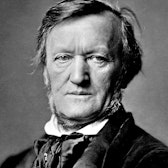
Richard Wagner's adaptation of Gluck's opera involved significant changes, including a completely different sound and a novel structure, leading one musicologist to suggest Wagner's share in the work might be as great as Gluck's.
Composition History
Richard Wagner's adaptation of Gluck's opera, titled "Iphigenia in Aulis," premiered on February 24, 1847, at the Royal Court Theatre in Dresden.
Interpretation
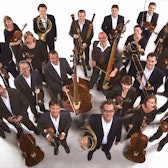
This recording uses 'romantic instrumentation from around 1840' and a slightly lower pitch standard of 437 Hz, aiming to reconstruct the sonic effects from Richard Wagner's time.
Performer Biography
Michelle Breedt, the mezzo-soprano singing Klytämnestra, is recognized as a leading interpreter of Gluck and Wagner roles across Europe and has been part of the Bayreuth Festival ensemble since 2000.
Compositional Technique
Richard Wagner's revisions to Gluck's opera included expanding the wind section of the orchestra with a third bassoon, a third trumpet, and two additional horns, as well as a new three-part trombone writing.
Composer's Artistic Vision
Richard Wagner's adaptation of Gluck's opera was part of his journey towards creating the 'artwork of the future,' transforming the traditional number opera into a scenically conceived musical drama.
Composition History
Christoph Willibald Gluck's tragédie-opéra "Iphigénie en Aulide" premiered on April 19, 1774, in Paris and was dedicated to Louis XVI.