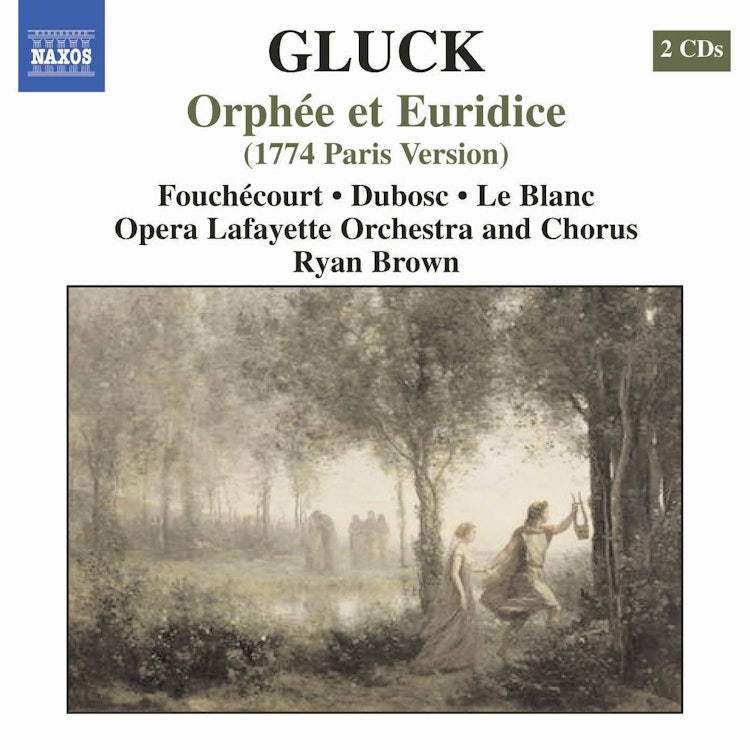
For the 1774 Paris version, Gluck rewrote the title role for a high tenor (haut-contre) and incorporated new dances and airs, including the famous flute solo from the Ballet des Ombres Heureuses.
Composition History
Gluck's opera Orphée et Euridice exists in three significantly different versions, composed for Vienna (1762), Paris (1774), and revised by Hector Berlioz for Paris (1859).
Composition History
The role of Orpheus was originally written for a castrato in 1762, then rewritten for a tenor in 1774, and later for a female alto by Hector Berlioz in 1859.
Composer's Artistic Vision
To adapt the Orpheus fable for the stage, the original libretto for Gluck's opera changed the tragic ending and added an episode where Love reunites Orpheus and Eurydice.
Critical Reception
The 1774 Paris version of Orphée et Euridice, featured on this album, was the most popular version in the 18th and early 19th centuries but is only now receiving renewed attention.
Historical Context
The relatively low pitch of the Paris Opera orchestra in the 18th century, and its flexibility, helped make the high tenor's vocal range possible in Gluck's 1774 version.
Recording & Production
This recording is based on the very first Paris performance of Orphée et Euridice on August 2, 1774, using performance materials from the Bibliothèque Nationale.