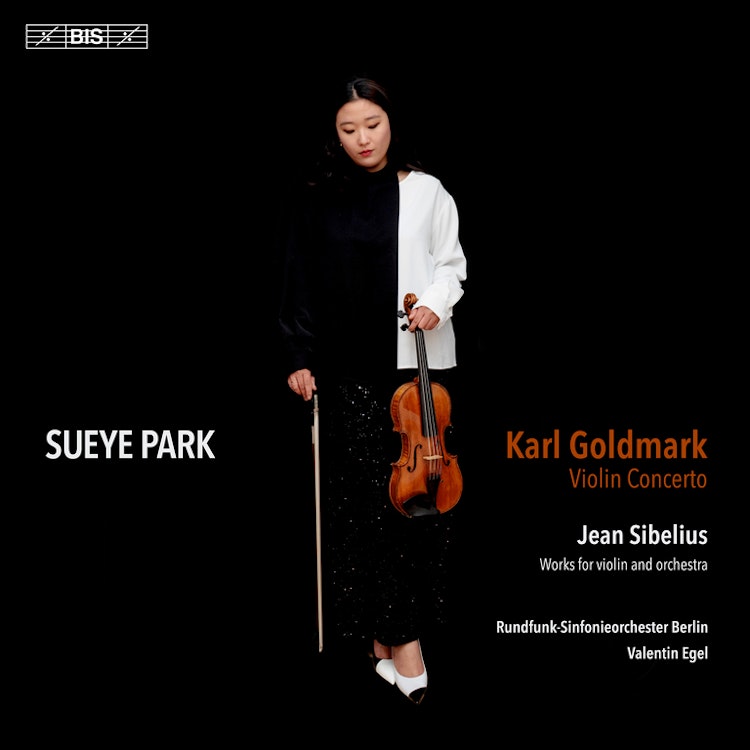
Goldmark and Sibelius: Works for violin and orchestra
7/10/2026, 10 Tracks, 1:05:09
Featuring
Sueye Park
Valentin Egel
Rundfunk-Sinfonieorchester Berlin
Karl Goldmark
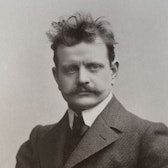
Jean Sibelius
Did you know?
1/7
Compositional Technique
Goldmark's Violin Concerto in A minor, Op. 28, features themes with a hint of Hungarian folk music and reflects influences from German Romanticism, with a balance between virtuosity and lyricism.
Composer's Artistic Vision
The relationship between Goldmark and Sibelius inspired violinist Sueye Park to perform Goldmark's concerto and combine both composers on this recording.
Composer Biography
Karl Goldmark and Jean Sibelius, though born 35 years and a thousand miles apart, shared similar challenging financial upbringings and were both competent violinists.
Composition History
Karl Goldmark, one of the composers on this album, was a teacher to Jean Sibelius, the other composer, in Vienna during 1890-91.
Composer Biography
Karl Goldmark, despite his Jewish origins, acknowledged the importance of the famously anti-Semitic Wagner and was involved in founding the Vienna Wagner Society.
Historical Context
Goldmark's Violin Concerto in A minor, Op. 28, was completed in 1877, a 'golden age' for violin and orchestra music that also saw works by Lalo, Sarasate, Brahms, Tchaikovsky, and Dvořák.
Instruments
Violinist Sueye Park performs on a Lorenzo Storioni violin from 1774 for the Goldmark and Sibelius Suite, and a François-Louis Pique violin from 1800 for the Sibelius Humoresques and Serious Melodies.