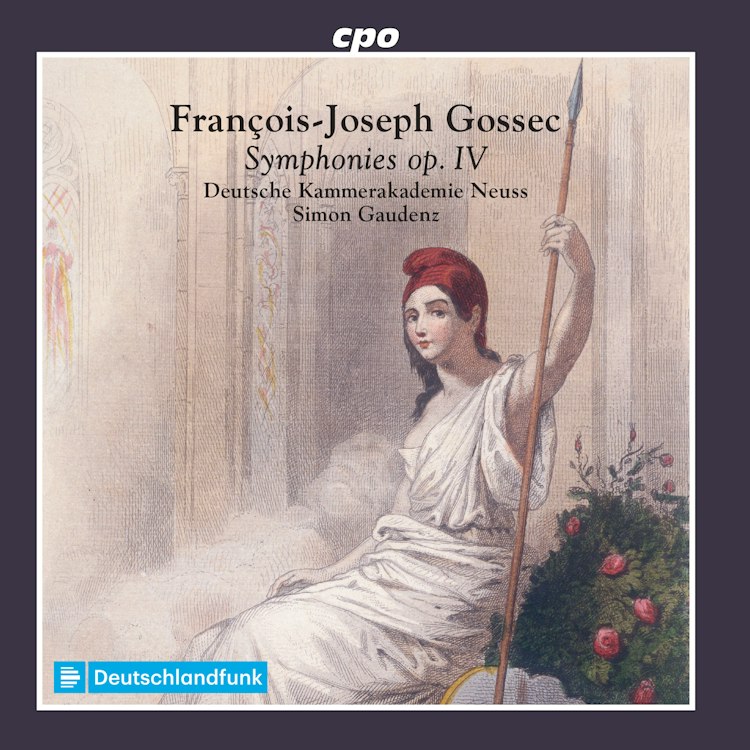
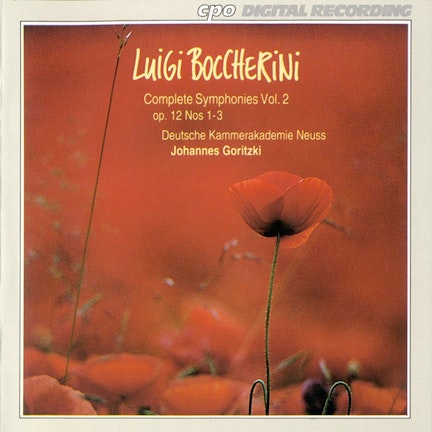
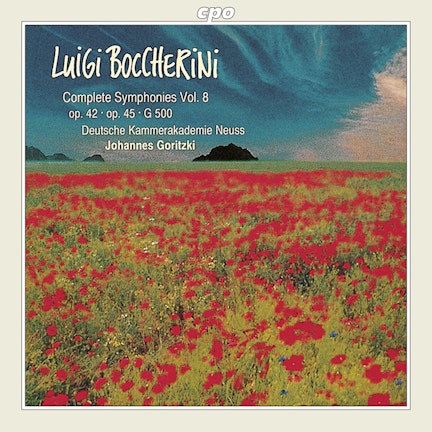
François-Joseph Gossec was one of the most significant composers of the later 18th century living in France, and he became particularly closely associated with the French Revolution. But long before that, he was a notable composer in the early days of the symphony. His set of six Symphonies op. 4, first published around 1758, is recorded for the first time as a complete set by Simon Gaudenz and the Deutsche Kammerakademie Neuss. These innovative works provide a fascinating insight into a lesser-known chapter of the symphony’s history.
Featuring
Simon Gaudenz
Deutsche Kammerakademie Neuss
François-Joseph Gossec
Did you know?
1/7
Historical Context
The Revolution of 1789 significantly changed the musical landscape, leading to the creation of a new genre of revolutionary music for republican celebrations.
Compositional Technique
The six Symphonies Op. IV by Gossec feature four movements and an expanded ensemble including oboes and/or horns, a development from his earlier Op. III which was scored for strings only.
Performer Biography
The Deutsche Kammerakademie Neuss am Rhein, founded in 1978 by Johannes Goritzki, is considered one of Germany's leading chamber orchestras, with musicians from twenty nations.
Composer Biography
Gossec became one of the leading composers of the French Revolution, contributing music for events like Robespierre's 'Festival of the Supreme Being' and a 'Hymn to Humanity'.
Composition History
Gossec's first series of six symphonies, Op. III, was published in 1756, predating Joseph Haydn's earliest symphonies.
Composer Biography
François-Joseph Gossec, born in 1734, was a musician, orchestra leader, and budding composer who became familiar with the most modern developments in orchestral music during his younger years.
Compositional Technique
Symphony No. 5, subtitled 'Pastorella,' is characterized by a pastoral, country atmosphere, featuring a moderate tempo, a piano opening, and long-drawn-out bourdon accompaniments.