Faust's theatricality and sexual allure led to its appearance in famous fiction, including Ouida's Moths and Gaston Leroux's Fantôme de l'Opéra.
Critical Reception
Despite its popularity, the opera faced early criticism from figures like Wagner, who dismissed it as 'upmarket musical prostitution,' though this was a minority view.
Cultural Impact
The novelist Charles Dickens described Faust as 'A noble and sad story nobly and sadly rendered,' stating it 'sounded in my ears like a mournful echo of things that lie in my own heart.'
Composition History
Gounod continuously revised Faust for nearly a decade after its premiere, including removing spoken dialogue in 1860 and adding a cavatina for baritone Charles Santley in 1863.
Critical Reception
For over 50 years after its 1859 premiere, Gounod's Faust was considered the world's most popular opera, though its success abroad was even more sensational than in France.
Composer Biography
Charles Gounod, the composer, won France's prestigious Prix de Rome at 21 and developed a deep interest in German music and culture, studying in Vienna, Berlin, and Leipzig.
Composition History
The Paris Opéra initially rejected Gounod's Faust for lacking 'spectacle,' but it was taken up by Léon Carvalho, manager of the Théâtre Lyrique, whose wife, Caroline, created the role of Marguerite.
You might also enjoy...
Stravinsky: Le sacre du printemps et Le rossignol
Gounod: Faust (Sung in English) / Faust: Ballet Music
Gounod : Faust
Gounod : Faust [Highlights]
Stravinsky: The Rite of Spring - The Nightingale
Gounod: Faust
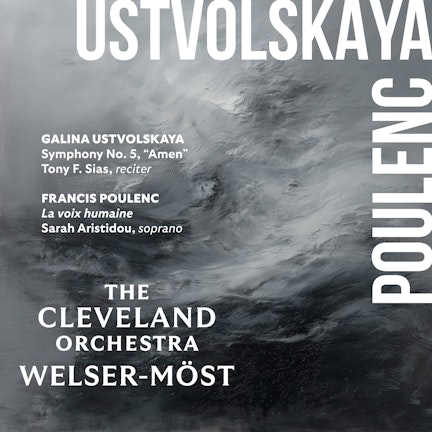
Ustvolskaya: Symphony No. 5 – Poulenc: La voix humaine
Blech: The Alpine King and the Misanthrope
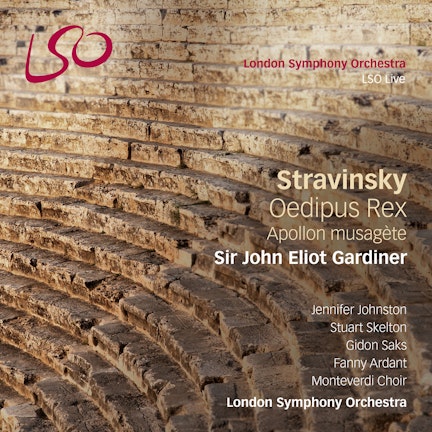
Stravinsky: Oedipus Rex & Apollon musagète
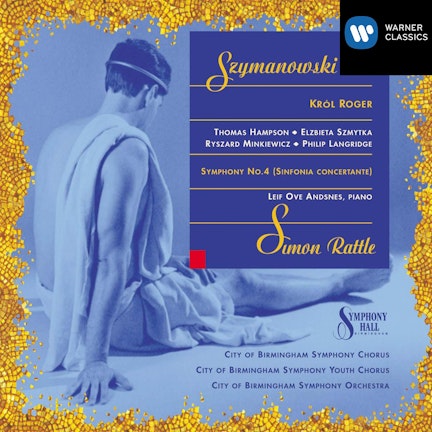
Szymanowski: Król Roger
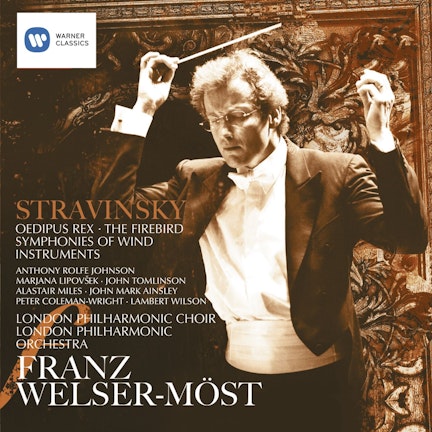
Stravinsky: Oedipus Rex, Firebird & Symphonies of Wind Instruments
Debussy: The Complete Opera, Lyric & Stage Works
Wagner: Der Ring des Nibelungen (Highlights)
Purcell Edition Volume 2 : The Indian Queen, The Tempest, Dioclesian & Timon of Athens