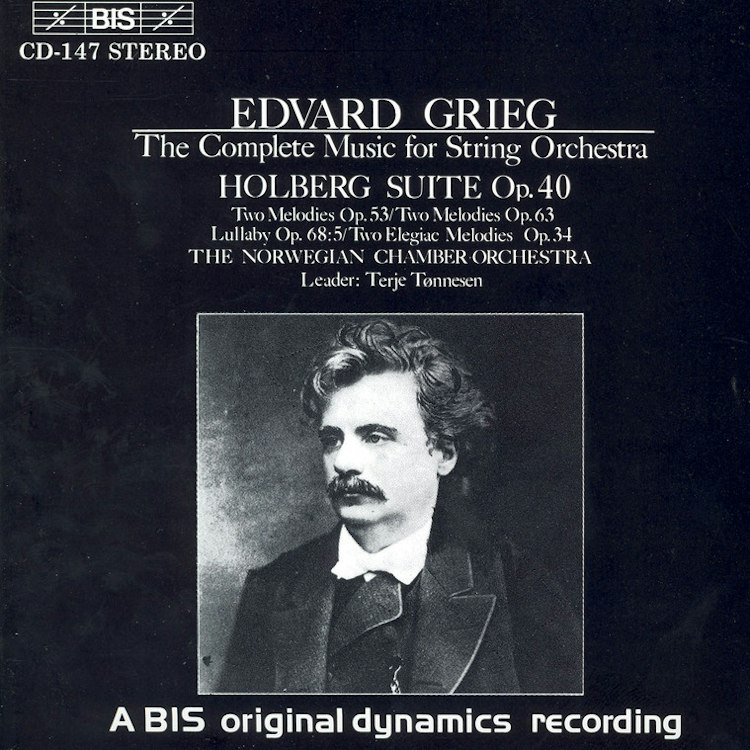
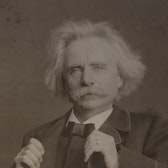
Grieg arranged his works for string orchestra to present new compositions as a popular conductor and to make them accessible to a broader concert hall audience than their original piano or song versions.
Historical Context
The string orchestra, popular in the 18th century, saw a revival in the late 19th century, initiated by Dvorak's Serenade for strings in E Major (1875) and followed by Tchaikovsky's Serenade in G Major (1880).
Performer Biography
Terje Tonnesen, the violinist and leader of The Norwegian Chamber Orchestra, was born in Oslo in 1955 and made a widely acclaimed debut in 1972, later studying with Max Rostal in Bern.
Composition History
Ten of Grieg's twelve pieces for string orchestra are arrangements of his own compositions, including six originally for piano and four for songs.
Composition History
Grieg composed From Holberg's Time, or The Holberg Suite, Op. 40, for piano in the summer of 1884 to celebrate the bicentenary of Ludvig Holberg's birth, who was from the same town as Grieg.
Composer's Artistic Vision
Grieg aimed for a full, rich sound in his string orchestra works, often dividing violins into four parts and violas and cellos into two, creating chords with up to 16 different notes without muddiness.
Notable Performances
Grieg himself conducted the premiere of his Two Elegiac Melodies, Op. 34, in Bergen on November 3rd, 1880, and later described a performance in Weimar as profoundly moving.
You might also enjoy...
Grieg: Music for Strings
Grieg: Holberg Suite / 2 Norvegian Airs / Lyric Pieces etc.
GRIEG: Music for String Orchestra
Grieg: holberg suite - string quartet in g minor - 2 elegiac melodies - erotikk
Grieg: Complete Symphonic Works, Vol. II
Grieg: Music for String Orchestra
Grieg: Symphonic Dances and other Orchestral Works