Grieg's music often features rhythms derived from folk-dances, and he believed one needed to understand and feel the dance rhythm to play his compositions.
Compositional Technique
Grieg's interest in harmony was central to his work, using it to bring forth the "soul" of folk-tunes and deliberately employing "radical" chord progressions.
Composer's Artistic Vision
Grieg felt his contribution was to "paint Norwegian Nature, Peasant Life, History and the Poetry of the People in Notes," embracing Romanticism.
Historical Context
Grieg's compositions were written during the "epoch of the piano," when piano-playing was at its peak in average homes, especially for middle-class girls.
Critical Reception
Despite increasing criticism from the musical establishment in his later years, Grieg's popularity among music-loving audiences grew inversely.
Composer's Artistic Vision
Grieg's development as a composer was decisively influenced by Rikard Nordraak, who believed the key to Norwegian music's future lay in nationalism and folk-songs.
Composer Biography
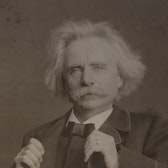
Edvard Grieg, the composer, received his fundamental musical training at the Conservatory in Leipzig from the age of fifteen.
You might also enjoy...
Mozart & Druzecky: 1791
Oh, Christmas Tree
Arien/Zitronen
Traditional & Modern Carols
Loves Comes In At The Eye
Sous l'Empire d'Amour - French Songs for Mezzo-Soprano and Lute
Schütz, Buxtehude: Awake O North Wind - German Music from Schütz to Büxtehude