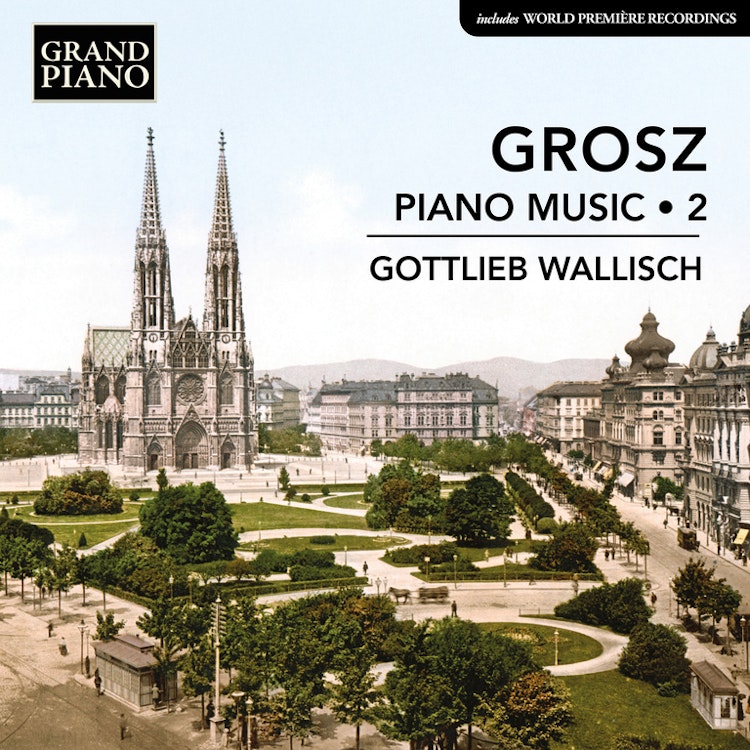
Wilhelm Grosz's Symphonic Variations, Op. 9, premiered at the inaugural Donaueschingen Chamber Music Performances in 1921, an event considered the 'Big Bang' of Central European musical modernism.
Composition History
Wilhelm Grosz had a passionate love affair with Arthur Schnitzler's wife Olga, which led to their divorce and may have inspired the fourth movement of his Kleine Sonate, Op. 16.
Compositional Technique
The Symphonic Variations, Op. 9, are described as a 'dramatic tone painting expanding to symphonic grandeur' on a single instrument, with an underlying theme evoking a 'vast hall of pillars'.
Historical Context
The finale of Grosz's Symphonic Variations, Op. 9, incorporates jazz motifs and a Viennese waltz, reflecting the instability of the post-World War I era.
Composer Biography
Wilhelm Grosz, the composer, came from a wealthy Jewish family in Vienna and received his musical training from prominent figures like Franz Schreker and Guido Adler.
Recording & Production
The Three Pieces for Piano, Op. 33, were rediscovered for this recording after their existence was only hinted at by a brief Wikipedia entry.
Composer's Artistic Vision
Wilhelm Grosz was praised by critics as one of the most versatile talents of his generation, with an oeuvre covering almost all musical genres.
You might also enjoy...
Mandoline. Dans les salons fin-de-siècle
Liszt: Complete Piano Music, Vol. 70
Draeseke: Piano Works
Salt Catchers
Czerny: Piano Music, Vol. 2
Feebles, Fables & Ferns
La Source
Prokofiev
Kuhlau: Complete Works for Piano Four Hands
Life’s Journeys: Linda Strommen Plays Oboe Works of Eric Ewazen
Ether (Part Two)
Ohe: 3 Piano Pieces, Op. 4: No. 1, Melody in F Major