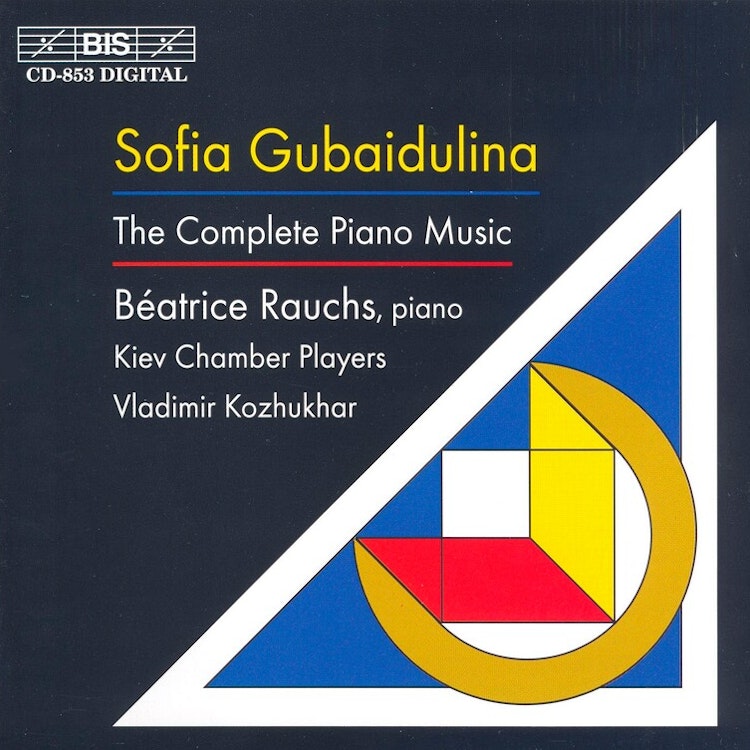
Gubaidulina's works gained international recognition from 1966 onwards, and became increasingly known in the West thanks to violinist Gidon Kremer, but interest in her native country only arose after perestroika.
Composer Biography
Sofia Gubaidulina, born in 1931 in the Tatar Autonomous Soviet Republic, began composing at age five out of an inner necessity, before she even had a teacher.
Composer Biography
Despite official criticism, Dmitri Shostakovich, a prominent Soviet composer, encouraged Gubaidulina to continue on her "wrong track."
Composer's Artistic Vision
Gubaidulina considers all her music to be religious, viewing religion as a reunification of opposites, like a "legato" in our often "staccato" lives.
Composer Biography
During her childhood, Gubaidulina found music to be a bright and heavenly escape from a life she described as "poor and uninteresting," with a "thoroughly grey" youth.
Composer Biography
Gubaidulina's musical conceptions and compositions often conflicted with the principles of Soviet realism, leading to criticism and defamation from official authorities.
Composer's Artistic Vision
Gubaidulina believes that duality, contrast, connection, and disconnection are fundamental to existence and play a significant role in her music.
You might also enjoy...
A Story of Life - Piano Works of Émile Naoumoff
Jack Gallagher: Piano Music
von Blumröder: Klavier
SOLATINO
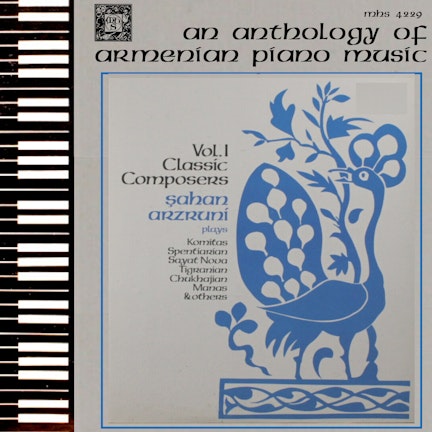
An Anthology of Armenian Piano Music, Vol. 1 - Classic Composers
Rachmaninov: Variations On A Theme of Chopin / Piano Sonata No. 2
Arvo Pärt: Für Anna Maria, Complete Piano Music
Thomas Pitfield: Piano Music
Respighi: Complete Piano Music, Vol. 2
Clara Schumann: Piano Music, Vol. 1
Vierne, L.: Piano Music
Vierne: L'œuvre pour piano
Scriabin: Preludes, Op. 11, Sonata 10, Liszt, Late Works