During his atonal period, Guerra-Peixe was a prominent member of the Música Viva group, which embraced the recently introduced twelve-tone composition style in Brazil.
Composition History
In the 1940s, Guerra-Peixe's classical compositions took a sharp turn towards atonality, a style he maintained until 1949, marking a period of high compositional output.
Composer's Artistic Vision
Guerra-Peixe believed a truly national musical style should not merely copy folk melodies but generate new art through these influences, merging folk elements from all regions of Brazil.
Composer Biography
Guerra-Peixe's move to Recife in Northeast Brazil initiated a phase focused on ethnomusicology research, where he documented folk traditions of Portuguese, African, and Indigenous peoples.
Composer's Artistic Vision
Guerra-Peixe's interest in composition was sparked by the ideas of Brazilian writer Mario de Andrade, particularly his 'Ensaio Sobre a Música Brasileira' (Essay on Brazilian Music), which advocated for a national representation in music.
Performer Biography
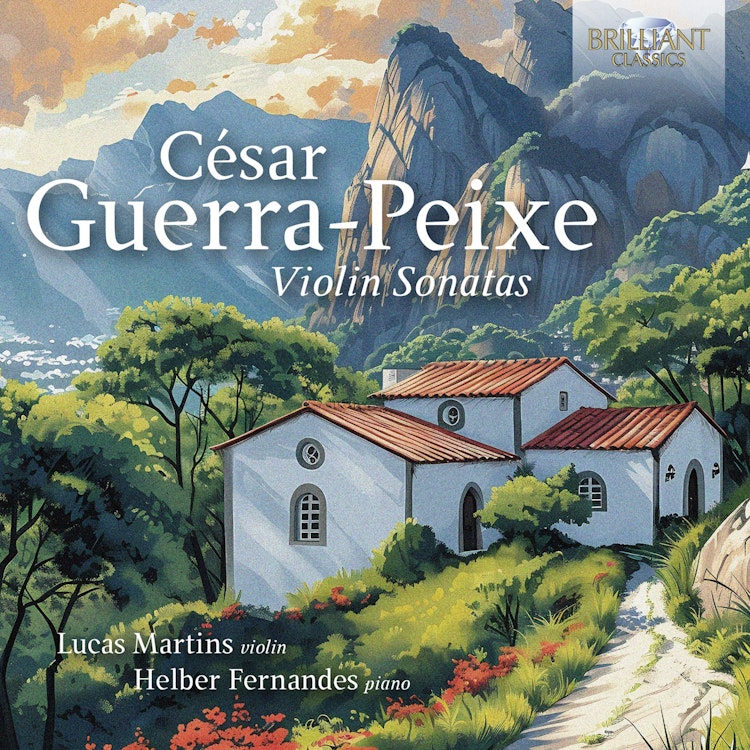
Lucas H. T. Martins, the violinist on this album, is dedicated to sharing his Brazilian cultural and musical heritage, having produced and performed in multiple CDs and recitals featuring Brazilian and Latin American composers.
Composer Biography
César Guerra-Peixe (1914-1993), the composer, began his musical journey in Petrópolis, Brazil, and initially chose the violin as his primary instrument.