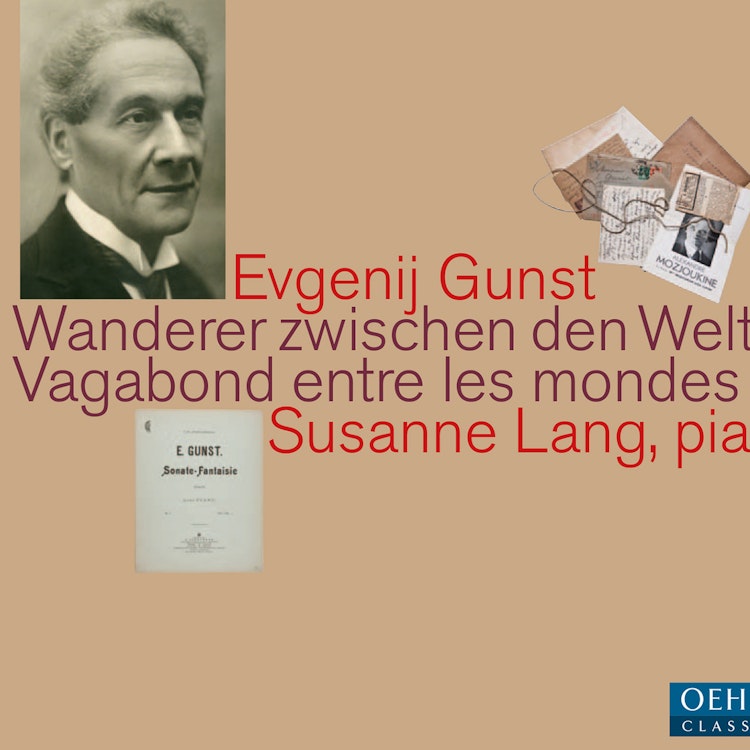
Evgenij Gunst, a composer and pianist, considered the piano his most important instrument, composing the majority and most significant of his works for it throughout his life.
Historical Context
Evgenij Gunst, along with his wife Varvara, fled Russia in 1920 due to the consequences of the 1917 Revolution, eventually settling in France.
Compositional Technique
Evgenij Gunst's later works, like the Douze Miniatures Op. 28, were influenced by his financial struggles, leading him to compose more popular and pedagogically useful music, similar in difficulty to Schumann's Kinderszenen or Debussy's Children's Corner.
Composition History
Evgenij Gunst's book 'A.N. Skriabin and His Oeuvre', published soon after the composer Skriabin's death, was the first written about him and is frequently referenced in later literature.
Composer Biography
Evgenij Gunst, a Russian composer and music critic, was also a solicitor by profession, having completed his law studies at Moscow University.
Cultural Impact
Evgenij Gunst's life and work were largely forgotten after his emigration from Russia, with his estate only being rediscovered by chance in 2010 in the basement of the Musicological Seminar of the University of Basle.
Critical Reception
The entry on Evgenij Gunst in the Russian 'Musical Encyclopaedia' is incomplete and incorrectly states his death year as 1938, when he actually died in 1950.