The Symphony No. 3 originally had programmatic titles for its six movements, such as 'Pan awakens' and 'What the flowers on the meadow tell me,' but Mahler removed them for publication.
Composer's Artistic Vision
Mahler's Symphony No. 3 explores an existential journey, seeking answers to philosophical questions about humanity's relationship with nature, a theme relevant during the industrialization of his time and still today.
Compositional Technique
Mahler's Symphony No. 3 is one of the longest symphonies ever, creating a vast musical landscape that includes natural sounds, children's songs, salon music, and military marches.
Composition History
Mahler composed his Symphony No. 3 during his summer holidays in 1895 and 1896, inspired by the landscape of the idyllic Attersee in Upper Austria.
Recording & Production
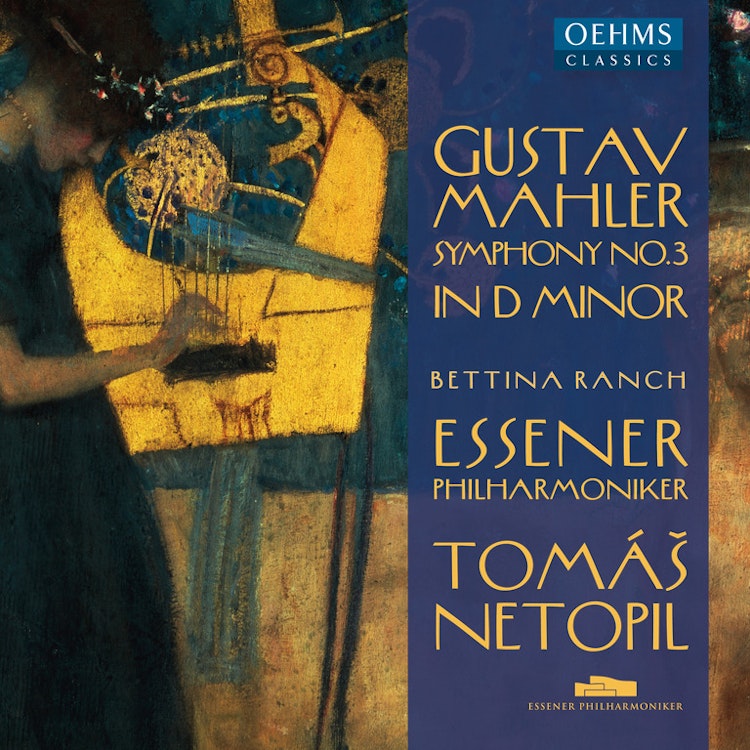
This recording of Mahler's Symphony No. 3 was made in January and February 2023 at the Philharmonie Essen, Alfried Krupp-Saal.
Composer's Artistic Vision
Gustav Mahler considered his Symphony No. 3 to be a way of "constructing a world with all the means of existing technique," rather than adhering to traditional symphonic form.
Performer Biography
Tomáš Netopil, the conductor on this album, has been the General Director of Music at the Aalto Music Theatre in Essen and the Essen Philharmonic since 2012.
You might also enjoy...
Mahler: Symphony No. 3
Mahler: Symphony No. 5 [2011 - Remaster]
Mahler: Symphony No. 4 (Recorded 1962)
Mahler: Symphonie No. 8
Mahler: Symphony No. 4
Mahler: Symphony No. 4
Mahler: Symphony No. 8, "Symphony of a Thousand"
Gustav Mahler: Symphony No. 4 in G Major
Mahler: Symphony No. 6
Mahler: Symphonie No. 7 (Live)
Mahler Symphony No. 4 conducted by Willem Mengelberg