The habanera became the soundtrack to the end of the Spanish empire in the Americas, particularly after the 'Disaster of 98' when Spain lost its last overseas colonies.
Cultural Impact
The Spanish press credited María Martínez with introducing the tango craze to Madrid, and she also took the genre, which was then often called 'habanera', to Paris.
Historical Context
The habanera, a genre of song and dance with mixed European and African roots, traveled from Cuba to Europe by the late 19th century, arriving in Spanish ports like Cádiz and Seville.
Album & Artwork
The album features remastered excerpts from two live recitals given by guitarist Ricardo Gallén at the Fundación Juan March in 2014 and 2017.
Composer Biography
María Martínez, a musically-gifted Afro-Cuban girl adopted by a Spanish official, had a meteoric but controversial career as a singer in Madrid, Paris, and London, known as 'the black Malibrán'.
Composition History
Georges Bizet used Sebastián Iradier's habanera 'El arreglito' as the basis for Carmen's famous entrance aria, 'L'amour est un oiseau rebelle', in his 1875 opera.
Performer Biography
Guitarist Ricardo Gallén has performed globally at prestigious venues like the Amsterdam Concertgebouw and Moscow's Tchaikovsky Concert Hall, and has recorded J.S. Bach's complete lute works.
You might also enjoy...
Cavatina
Matiegka: Works for Solo Guitar
Sonata Eroica - Yoshinobu Hara Guitar Recital 5
Susanne Mebes plays Manuel M. Ponce Guitar Solo Works
Spanish Guitar Favorites
Lorenz, David: The Spanish Guitar
Sarabande - Yoshinobu Hara Guitar Recital VI
The Sleep of Reason: A Classical Guitar Story
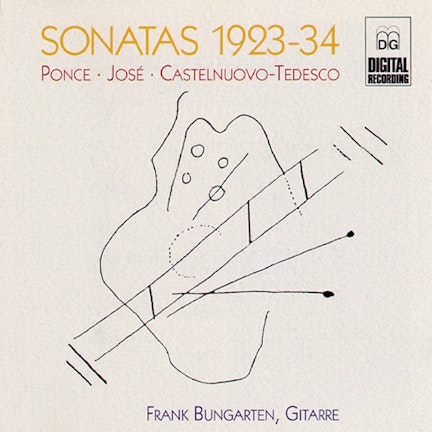
Ponce & José & Castelnuovo-Tedesco: Sonatas 1923-34
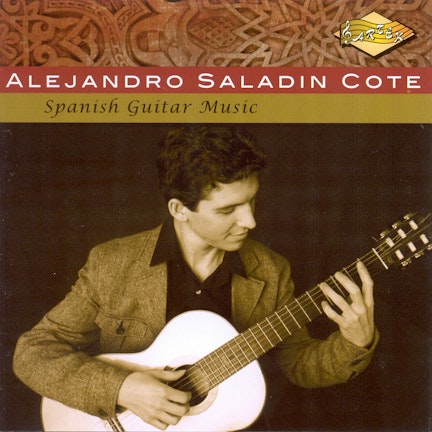
Guitar Recital: Cote, Alejandro Saladin - Turina, J. / Tarrega, F. / Albeniz, I. / Pujol, E. / Llobet Soles, M.