The Akademie für Alte Musik Berlin complete their trilogy of albums chronicling Handel’s concerti grossi – the first two parts of which have garnered acclaim – with his six Op. 3 works. They were likely not written as a set but rather compiled by a publisher, but they nonetheless make a colourful and entertaining whole. The musicians are led by concertmaster Georg Kallweit.
Featuring
Georg Kallweit
Akademie für Alte Musik Berlin
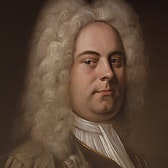
George Frideric Handel
Did you know?
1/6
Composition History
Most of the works in Handel's Opus 3 were assembled from overtures composed in the 1710s, when Handel was active in London's opera scene.
Composition History
Handel's Opus 3 concerti grossi were published in 1734 by John Walsh, likely without Handel's permission, and contained errors.
Recording & Production
This album was recorded at the Nikodemuskirche, Berlin, in May 2019, with Karel Bruggeman as recording producer and editor.
Compositional Technique
Some concerti in Opus 3 adopt the Venetian-style solo concerto with clear ritornelli, a structural device where the ripieno group opens a movement with a theme and returns to it.
Compositional Technique
Unlike Corelli's string-focused concerti grossi, Handel's Opus 3 concerti feature a more diverse instrumentation, including flute, bassoon, and especially oboe, leading to their nickname 'Handel's oboe concertos'.
Historical Context
The publisher John Walsh capitalized on the immense popularity of Arcangelo Corelli's concerti grossi in Britain, which was fueled by the growth of music societies and public concerts.