Handel began composing his last oratorio, Jephtha, on January 21, 1751, but his failing eyesight forced him to stop on February 13, permanently losing sight in his left eye, though he persisted and finished the work.
Composition History
Handel's oratorios between 1746 and 1748 were a direct response to the exiled Stuart family's last attempt to regain the English throne, which culminated in their defeat at Culloden in 1746.
Performer Biography
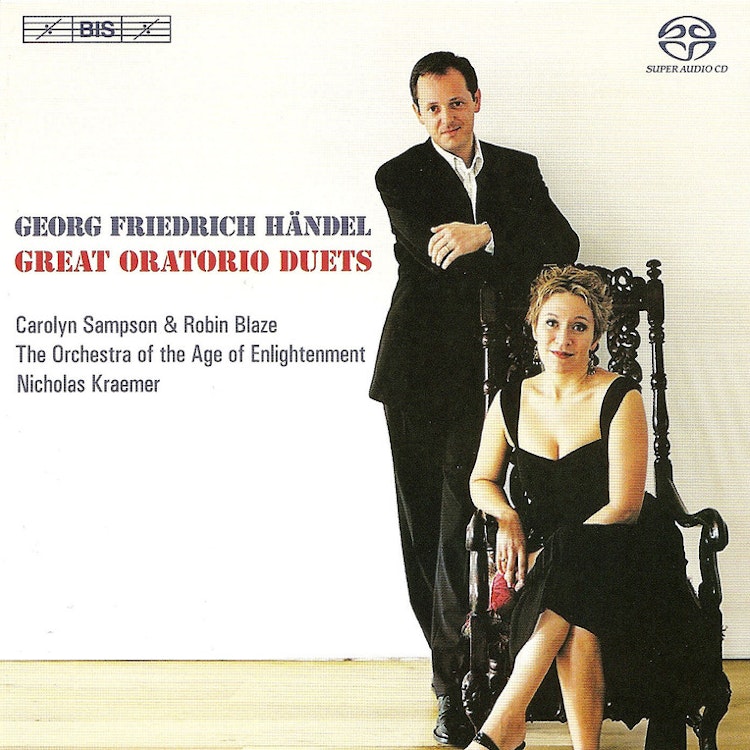
Nicholas Kraemer, the conductor on this album, began his career as a harpsichordist and frequently directs from the keyboard, holding principal guest conductor positions with Manchester Camerata and Music of the Baroque, Chicago.
Compositional Technique
Despite the scarcity of duels in Handel's English oratorios and odes, the duets on this album demonstrate his perceptive and lively use of two voices as 'sparring partners'.
Composition History
Handel's ode, Eternal source of light divine, composed for Queen Anne's birthday in 1713, was cancelled due to the Queen's illness, but Handel reused the duet 'Kind health descends on downy wings' nineteen years later in his first English oratorio, Esther.
Performer Biography
The Orchestra of the Age of Enlightenment (OAE), founded in 1986, is a self-governing orchestra of period instrument exponents, known for its energetic playing that comes from the entire ensemble rather than a single conductor.
Composer Biography
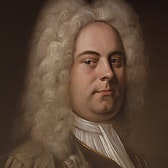
George Frideric Handel, a young Lutheran organist, gained experience composing operas in Hamburg and Italy before settling in England for the rest of his career after visiting London in 1711.
You might also enjoy...
Erlebach, P.H.: Cantatas
Telemann: Der Tod Jesu, TWV 5:6
Lucchesi: La Passione di Gesù Cristo
Feo, F.: Missa Defunctorum / Confitebor
Homilius: Der Messias
Catel: Sémiramis
Wagner: Das Rheingold (Sung in English) [Live]
Wolf: Passionsoratorium "Jesu, deine Passion will ich jetzt bedenken"