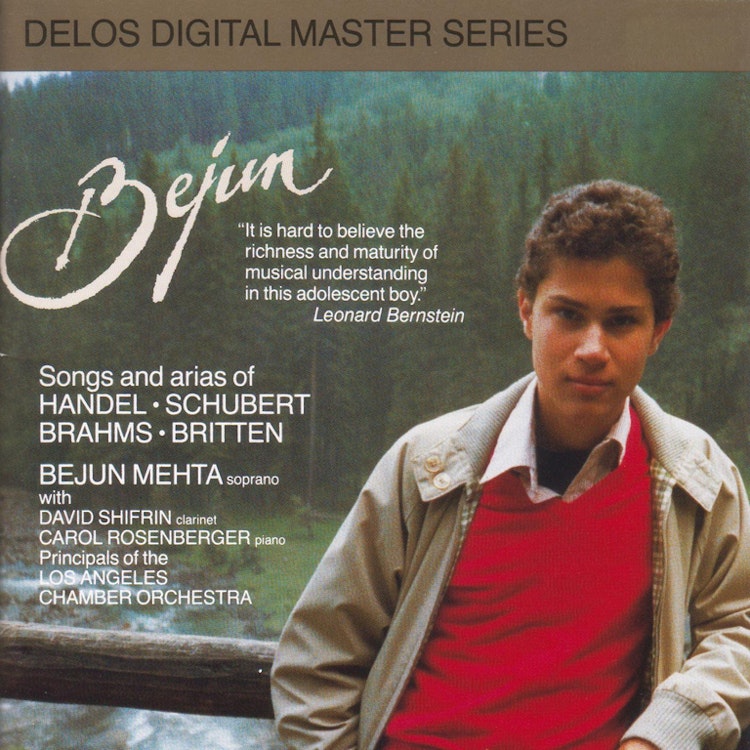
Handel, G.F.: If God Be for Us, Who Can Be Against Us? / Where'Er You Walk / Schubert, F.: Der Hirt Auf Dem Felsen
1/1/1987, 12 Tracks, 46:33
Featuring
Bejun Mehta
David Shifrin
Carol Rosenberger
Los Angeles Chamber Orchestra
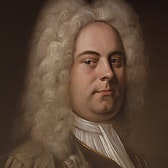
George Frideric Handel
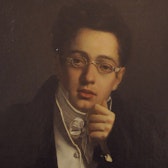
Franz Schubert
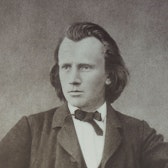
Johannes Brahms
Benjamin Britten
Did you know?
1/7
Interpretation
Bejun Mehta possessed a natural 'mezza-voce technique' from a young age, allowing him to unify his vocal registers without conscious effort and focus on refinements typically reserved for mature singers.
Compositional Technique
Franz Schubert expanded the role of accompaniment in his art songs, broadening his harmonic/expressive language and giving this musical element an independent and dramatic appeal.
Composer's Artistic Vision
Johannes Brahms aimed for reform in his folk songs, pushing against what he perceived as Romantic excess and holding the folk song as his ideal.
Composer's Artistic Vision
George Frideric Handel, facing declining popularity of Italian opera in England, created the English oratorio as a new musical form to satisfy the British public's desire for distinctly English entertainment.
Compositional Technique
Handel's oratorio style is characterized by enormous power, expressive simplicity in melodies, clear harmonies, and a strong dramatic sense, creating satisfying and whole structures.
Performer Biography
Bejun Mehta's mother, Martha Ritchey Mehta, a singer/teacher/journalist, received her vocal training in Vienna with Elisabeth Rado and has been Bejun's sole voice teacher.
Performer Biography
Bejun Mehta, the soprano on this recording, began his solo career at age nine, performing concerts close to home to maintain a normal childhood.