The final chorus of the Occasional Oratorio, 'God save the King, long live the King', is a re-texted version of Handel's 1727 coronation music, Zadok the Priest.
Composition History
Handel composed the Occasional Oratorio in 1746 in response to the Jacobite rising, led by 'Bonnie Prince Charlie', who aimed to overthrow King George II.
Compositional Technique
The libretto for the Occasional Oratorio, compiled by Newburgh Hamilton, incorporates texts from John Milton, Edmund Spenser, and even existing works like Thomas Morell's Judas Maccabaeus.
Composer's Artistic Vision
Handel's Occasional Oratorio lacks a traditional plot and allegorical figures, instead focusing on the central message that a troubled nation can overcome an enemy with God's help.
Compositional Technique
Handel reused musical material from his earlier works, including choruses from Israel in Egypt and excerpts from his popular Concerti Grossi Opus 6, to create the Occasional Oratorio.
Recording & Production
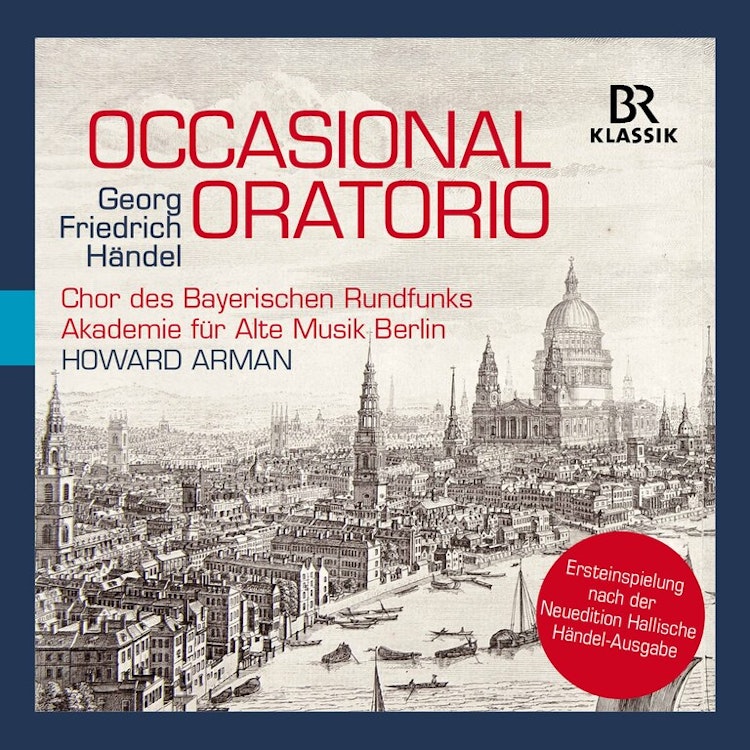
This recording is based on the 2009 new edition of the Occasional Oratorio, part of the Halle Händel Edition, which incorporates all important sources and variants of Handel's score.
Historical Context
The oratorio was written during a period of panic in London, as 'Bonnie Prince Charlie' and his 'Jacobite' rebels advanced to within 150 miles of the city.