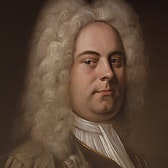
Händel's Utrecht Te Deum and the Ode for the Birthday of Queen Anne elevated him to the rank of state composer and earned him a lifelong annual pension of 200 pounds from Queen Anne.
Compositional Technique
Händel's Te Deum is twice as long as Henry Purcell's popular 1694 Te Deum and features a new use of woodwinds, contributing to its monumental character.
Composition History
Händel's Utrecht Te Deum, his first piece of English church music, was performed on July 7, 1713, in London's St. Paul's Cathedral to celebrate the Peace of Utrecht.
Composition History
Georg Friedrich Händel composed his Utrecht Te Deum and Jubilate for the celebrations of the forthcoming peace treaty that would end the Spanish War of Succession.
Compositional Technique
Händel chose an English version of the original Latin Te Deum text from the Book of Common Prayer of 1662 to make his work accessible to the broader British public.
Recording & Production
This album is a coproduction by Südwestrundfunk and Carus-Verlag, recorded live at the Liederhalle Stuttgart on September 9, 2018.
Compositional Technique
Händel's Utrecht Te Deum uses a dramatic contrast between quiet, dissonant a cappella sections and powerful, fast choruses and orchestras to represent the overcoming of death, a technique also seen in his later Messiah.
You might also enjoy...
Handel: Works for Voices & Orchestra (Live)
Handel: Chandos Anthems Nos. 5a, 6a & 8
Handel: Chandos Anthems, Vol. 2
Handel Coronation Anthems
Handel: Coronation Anthems; Arias and Choruses
Handel: Coronation Anthems
Handel: 4 Coronation Anthems/Dixit Dominus etc.
J.S. Bach: The Great Choral Masterpieces
J.S. Bach & Handel Arias [1953 Recording]
Handel: Sacred Works
Handel Edition Volume 7 - Saul, Alexander's feast, Ode for St Cecilia's Day, Utrecht Te Deum, Apollo e Dafne, Giulio Cesare
SCHUTZ, H.: Choral Music (Dresden Kreuzchor, Mauersberger)