Handel initially chose not to publish Water Music for financial reasons, finding it more profitable to hire out copies made by his own scribes rather than receiving a modest upfront fee from a publisher.
Composition History
The original autograph score of Handel's Water Music has not survived, and he never published the music in its entirety, making it difficult to establish the original order of movements.
Critical Reception
King George I approved of Handel's Water Music so greatly that he requested it be repeated three times during the 1717 river party, even though each performance lasted an hour.
Historical Context
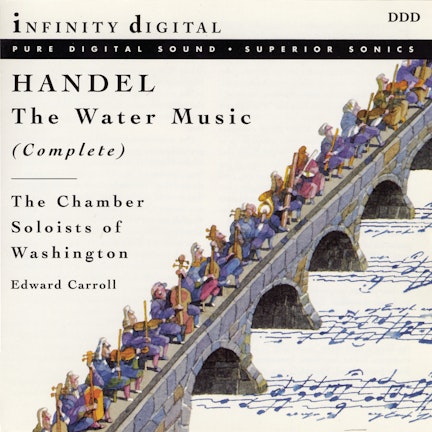
The 1717 royal river party, for which Handel's Water Music was performed, involved 50 musicians playing various instruments on a barge next to the King's.
Composition History
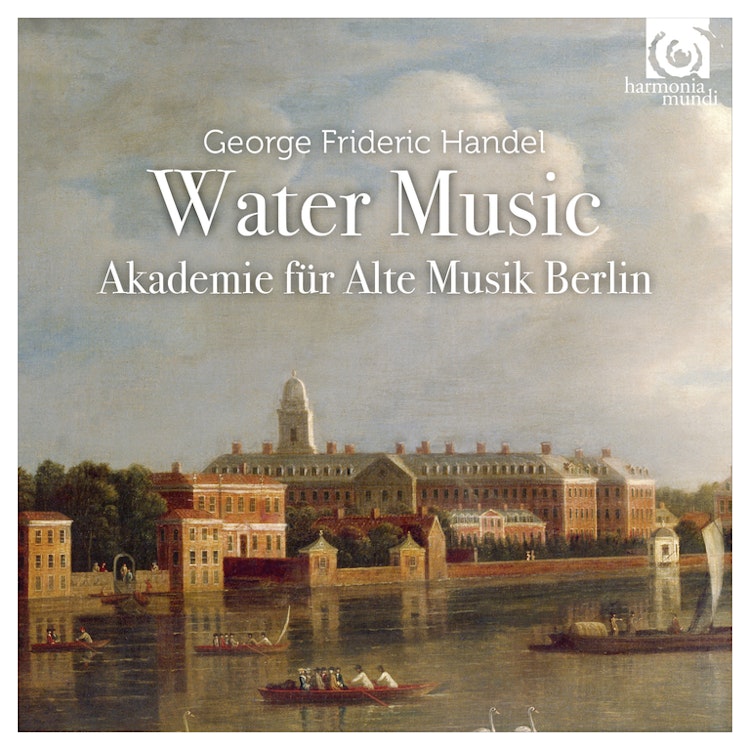
Handel's Water Music was specially composed for a royal river party on the Thames in 1717, attended by King George I and his entourage.
Compositional Technique
Handel's Water Music is structured into three distinct suites, each with different keys and orchestrations, suggesting they may have originated at different times.
Compositional Technique
The F major Suite of Water Music likely marks one of the first appearances of a pair of horns in an English orchestra, with Handel writing imaginative and vigorous parts for them.
You might also enjoy...
Handel: Water Music Suites Nos. 1-3
Handel, G.F.: Water Music / Music for the Royal Fireworks