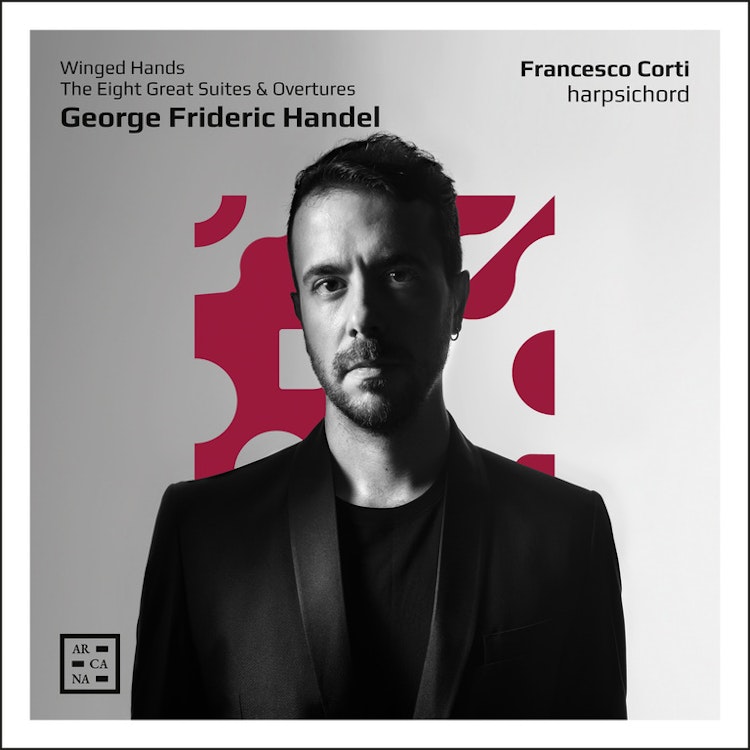
Handel: Winged Hands. The Eight Great Suites & Overtures
3/11/2022, 49 Tracks, 2:27:03
Featuring
Francesco Corti
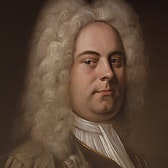
George Frideric Handel
William Babell
Did you know?
1/7
Composer Biography
Handel, the composer, was once discovered playing the harpsichord in a masquerade in Venice, where Domenico Scarlatti, another famous composer and harpsichordist, affirmed it could only be him or the devil.
Interpretation
Handel's notational choices in his keyboard music are often challenging, with inconsistent rhythms and sections left open for free interpolations, reflecting his own improvisation practices.
Critical Reception
The famous scientist Sir Isaac Newton, upon hearing Handel play the harpsichord, could only remark on the "elasticity of his fingers," suggesting he lacked appreciation for the musical artistry.
Composer's Artistic Vision
Handel's harpsichord suites showcase a unique fusion of French, Italian, and German styles, creating an unmistakably 'Handelian' sound.
Compositional Technique
The suites include traditional dance movements, Italian concerto-style pieces, fugues, and variations, such as the famous 'Harmonious Blacksmith' from Suite No. 5.
Recording & Production
The harpsichord used for this recording was made by Andrea Restelli in 1998, modeled after an instrument by Christian Vater from 1738, which is housed in the Germanisches Museum in Nuremberg.
Composition History
Handel was compelled to publish his Suites de Pièces pour le clavecin, also known as 'The Eight Great Harpsichord Suites,' due to the circulation of unauthorized and inaccurate copies of his works.