The album "Harmonies Hongroises" combines music by Franz Liszt, born in the Kingdom of Hungary, with music by Hungarian composers from the first half of the 20th century.
Compositional Technique
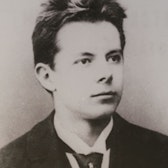
Béla Bartók's Rhapsody No. 1, also known as 'Folk Dances', follows the two-part structure of the Hungarian Csárdás dance, with a slow 'Lassú' and an exuberant 'Friss' section.
Composition History
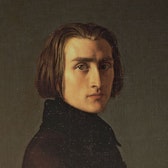
Franz Liszt's Cantique d'amour, from his piano cycle Harmonies poétiques et religieuses, was dedicated to Princess Carolyne von Sayn-Wittgenstein, his companion, during a time when they sought marriage.
Composer Biography
Franz Liszt's artistic life was shaped by the tension between art and religion, and between freedom of expression and dogmatic limitations.
Performer Biography
László Fenyő, a Hungarian cellist, won the International Pablo Casals Contest in 2004 and is known for his technical skill and emotional expressiveness.
Composer Biography
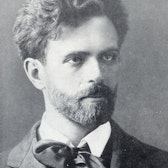
Zoltán Kodály, a Hungarian composer, studied at the Music Academy in Budapest, founded by Franz Liszt, and later taught there as a composition professor.
Composition History
Béla Bartók's Rhapsody No. 1, originally for violin and orchestra, was first premiered in its cello and piano version with cellist Jenő Kerpely in Budapest in 1929.
You might also enjoy...
Silent Dreams
Adagietto
The Essentials: Cello
15
Italian Cello Sonatas
Piazzolla, Ustvolskaya, Schnittke: Works for Cello (Russia, 1996)