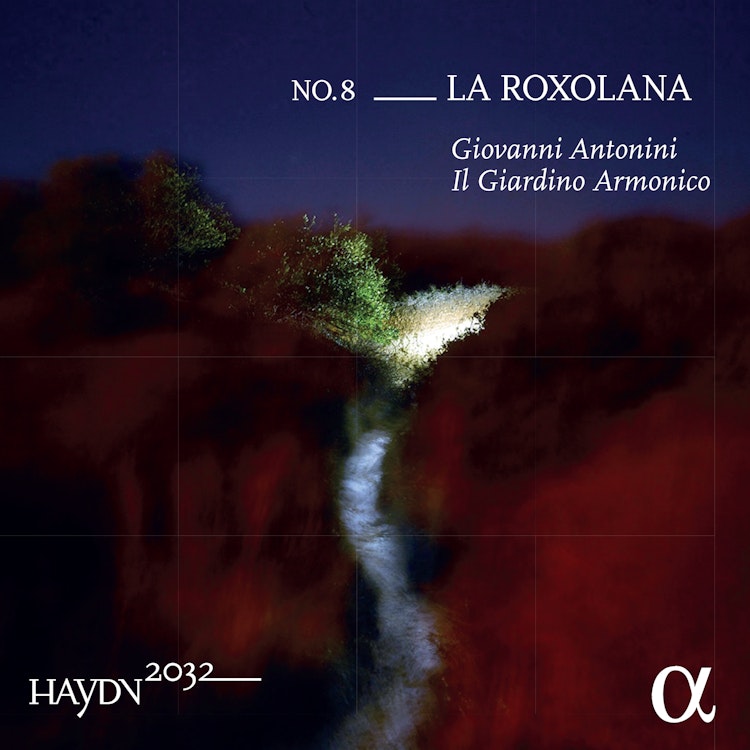
Haydn, always influenced by music from beyond his native land, named his Symphony No. 63 "La Roxolana" after a famous 16th-century slave turned sultana, and Giovanni Antonini and Il Giardino Armonico pair this work with Bartók's Romanian Folk Dances. This is Volume 8 of the ambitious Haydn2032 project, which is recording the complete 107 symphonies of Joseph Haydn before his tricentenary in 2032.
Featuring
Giovanni Antonini
Il Giardino Armonico
Joseph Haydn
Béla Bartók
Anonymous
Did you know?
1/7
Recording & Production
Each volume of the Haydn2032 project includes music by other composers contemporary with Haydn, such as Gluck, W. F. Bach, Mozart, Cimarosa, and Kraus, to establish links between works.
Interpretation
The performance of Bartók's Romanian Folk Dances on this album uses 16th and 17th-century instruments like the Renaissance flute (traversa) and chalumeau, to evoke the timbres of Eastern European and Middle Eastern folk culture.
Composer's Artistic Vision
Giovanni Antonini, the artistic director of the Haydn2032 project, views Haydn's music as 'a kaleidoscope of human emotions' and approaches the symphonies thematically rather than chronologically.
Compositional Technique
Haydn's compositions often feature folk themes in his minuets and trios, and sometimes 'hidden' stylistic and rhythmic references to folk music, such as off-beat chords or asymmetrical phrase structures.
Album & Artwork
The Haydn2032 project collaborates with the famous Magnum agency, founded by photographers like Robert Capa and Henri Cartier-Bresson, to create the photographic universe for the series, with a Magnum photographer selected for each recording.
Album & Artwork
This album is part of the Haydn2032 project, which aims to record all 107 of Joseph Haydn's symphonies by the 300th anniversary of his birth in 2032.
Performer Biography
Il Giardino Armonico, founded in 1985 and directed by Giovanni Antonini, is one of the world's leading period instrument ensembles, focusing on 17th and 18th-century repertoire.
You might also enjoy...
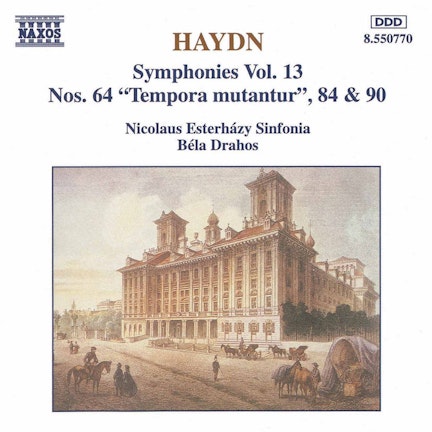
HAYDN: Symphonies, Vol. 13 (Nos. 64, 84, 90)
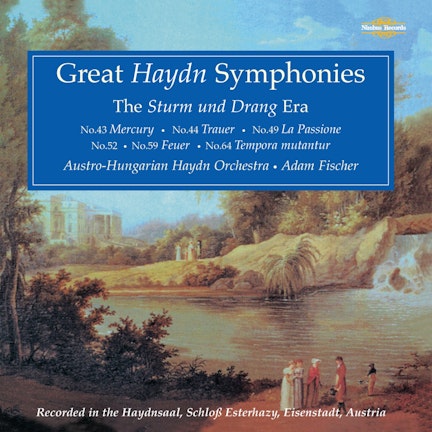
Great Haydn Symphonies: Orchestral Favourites, Vol. XVIII