Haydn secretly practiced the baryton to master it, despite his wife's complaints, but gave up becoming a virtuoso after Prince Esterhazy's indifferent reaction to his playing.
Composition History
Joseph Haydn was obligated to compose for the baryton because his patron, Prince Nicolas Esterhazy, was passionate about the instrument.
Compositional Technique
The metal sympathetic strings of the baryton are typically tuned to F sharp and C sharp, which limits the trios to sharp keys like G, D, and A major.
Instruments
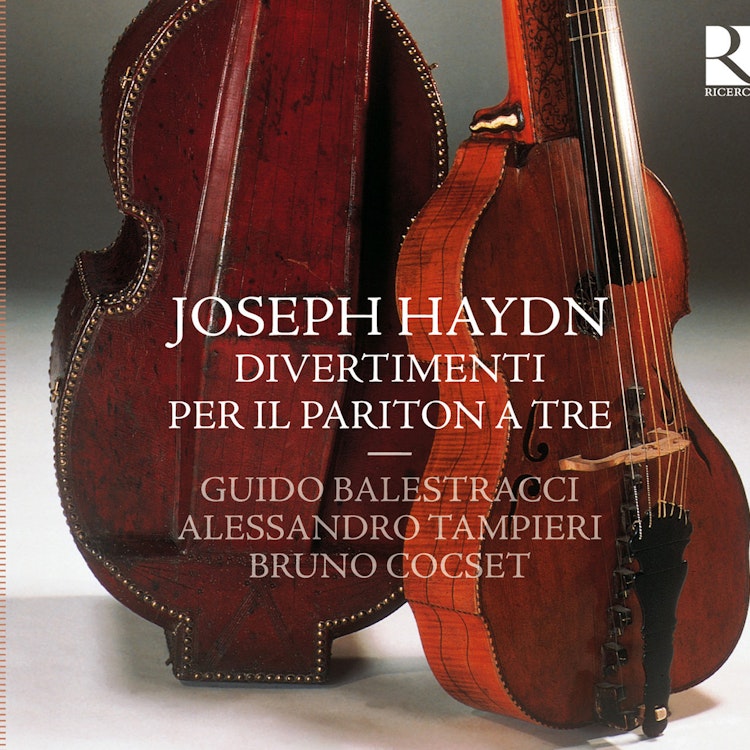
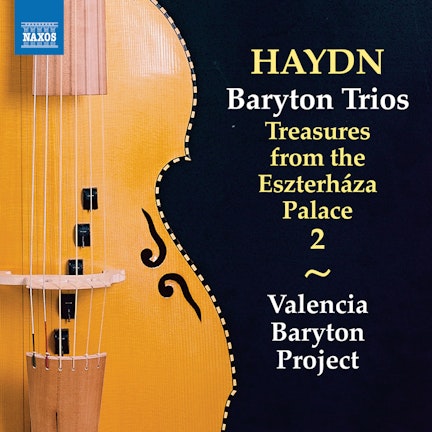
The baryton, an instrument featured on this album, is a member of the viol family, borrowing features from the viola da gamba and viola d'amore.
Instruments
The baryton has both gut playing strings and metal sympathetic strings, which can resonate or be plucked by the thumb, increasing its polyphonic capabilities.
Composition History
Haydn composed a significant amount of music for the baryton, including 126 trios for baryton, viola, and cello, between 1765 and 1776.
Composer's Artistic Vision
Haydn infused these baryton trios with his characteristic personal humor, imaginative themes, and a balance of energy in fast movements and sublime illumination in slow ones.
You might also enjoy...
Haydn: Baryton Trios, Vol. 2
Mozart: Divertimento K. 563 / Preludes and Fugues K. 404a
Mozart: Divertimento & Preludes to Bach
Mozart: Preludes & Fugues Nos. 1, 5 & 6, K. 404a
Joseph Haydn: Four Baryton Trios (Remastered 2022)
Mozart: Divertimento, K. 563 - Preludes and Fugues
Michael Haydn: Complete Wind Concertos, Vol. 1
Michael Haydn: Divertimenti
Mozart: Sacred Music
Schubert: String Quintet & Octet
Mozart: Mass No. 16, 'Coronation Mass' / Exsultate, Jubilate / Ave Verum Corpus