The wedding festivities for which Acide was composed included a three-day feast at Eisenstadt, with illuminated roads, grenadiers on parade, and a masked ball for 600 people.
Composer Biography
Haydn learned Italian and composition from Pietro Metastasio, an imperial court poet, and Nicola Porpora, an important Italian opera composer, while living in a squalid attic room in Vienna.
Recording & Production
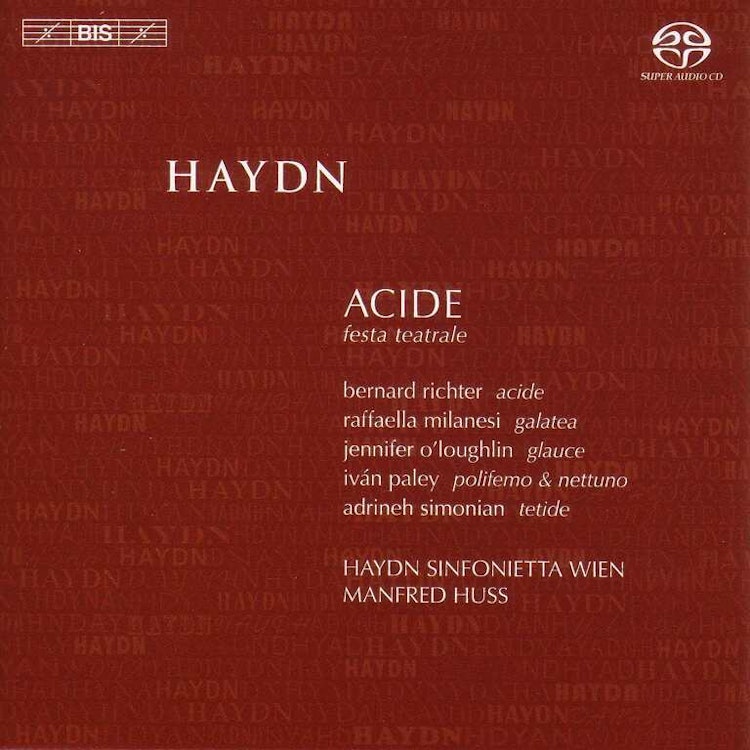
This recording is part of a collaboration between BIS Records and Haydn Sinfonietta Wien for the 2009 bicentenary of Joseph Haydn's death, focusing on rare works.
Compositional Technique
In the 1773 revised version of Acide, Haydn abandoned da capo arias and used horns in a low register to create a terrifying effect in Galatea's accompagnato, anticipating Eurydice's death scene in his later Orfeo.
Interpretation
The Haydn Sinfonietta Wien, founded by Manfred Huss, has performed on period instruments since 1991 and is considered a leading interpreter of Viennese Classical and late Baroque music.
Composition History
Acide is a 'festa teatrale', a sub-genre of Italian opera developed in 18th-century Vienna for great occasions, often based on classical mythology with a moralizing adaptation.
Composition History
Haydn's opera Acide was composed for the 1763 wedding of Count Anton Esterházy, the eldest son of his employer Prince Nikolaus Esterházy I.
You might also enjoy...
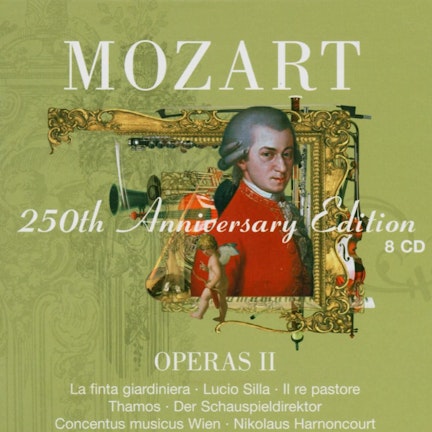
Mozart : Operas Vol.2 [La finta giardiniera, Lucio Silla, Il re pastore, Thamos, Der Schauspieldirektor]
Mozart: L'Oca del Cairo / Lo Sposo Deluso
Mozartissimo - Best of Mozart
The Australian Opera Mozart Bicentennial Celebration
The Australian Opera Mozart Bicentennial Celebration
Mozart: Complete Edition Box 14: Middle Italian Operas