Some of Haydn's contemporaries criticized his late Masses as 'too cheerful to be sacred,' with critics finding lively tempos and waltz-like meters more suitable for the dance hall than the church.
Performer Biography
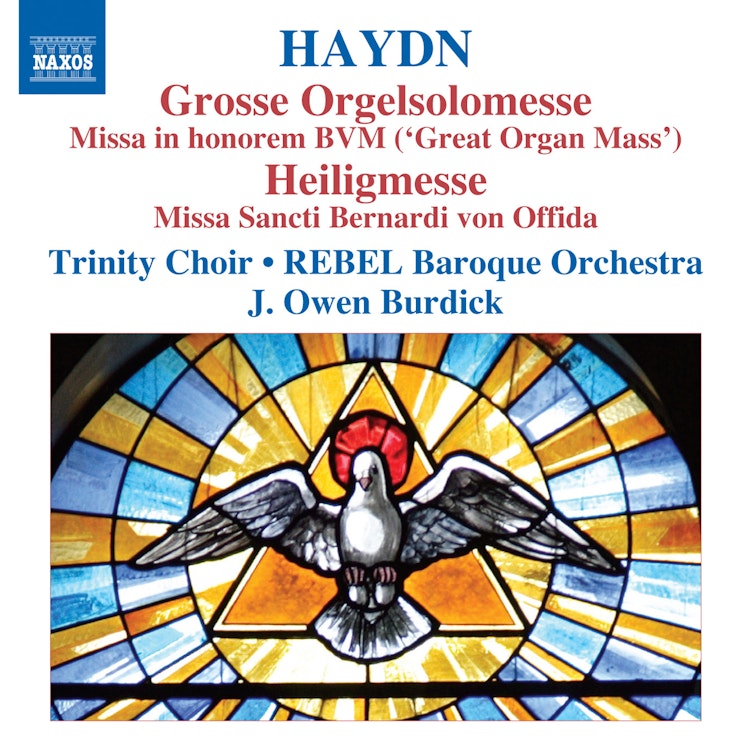
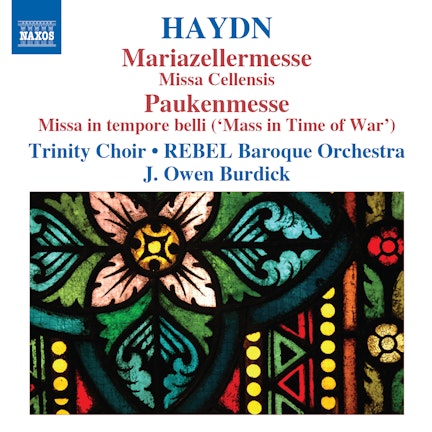
REBEL, the Baroque orchestra on this recording, was named after the composer Jean-Féry Rebel and won the 1991 Van Wassenaer Competition in Holland.
Composer Biography
Haydn's earliest musical experiences were as a choirboy, and his first and last compositions were Mass settings, highlighting the unique role sacred music played in his development.
Composition History
After Prince Anton's death in 1794, the new Prince Nicolaus II Esterházy required Haydn, his Kapellmeister, to compose a Mass each year to celebrate his wife Princess Marie Hermenegild's nameday.
Composer's Artistic Vision
Haydn believed his compositional process and artistic inspiration were linked to spirituality, reportedly saying he would pray with his rosary when ideas wouldn't come.
Recording & Production
The two Masses on this album were recorded at Trinity Church, New York, with the Grosse Orgelsolomesse recorded in May 2002 and the Heiligmesse in May 2006.
You might also enjoy...
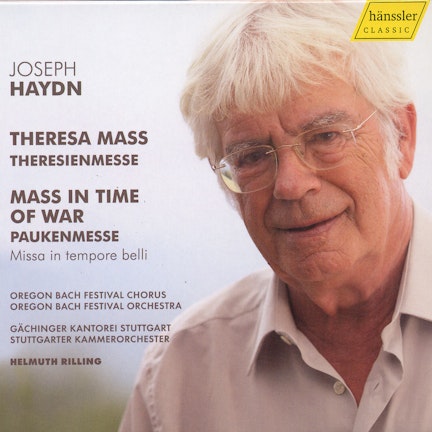
Haydn, J.: Mass in B-Flat Major, "Theresienmesse" / Mass in C Major, "Paukenmesse"
Beethoven: Mass in C Major / Mozart, W.A.: Vesperae Solennes De Dominica