Haydn's masses, like Mozart's, are rooted in a cheerful, Neapolitan-influenced idiom prevalent in Austria and southern Germany, characterized by 'light airs and turbulent accompaniments'.
Compositional Technique
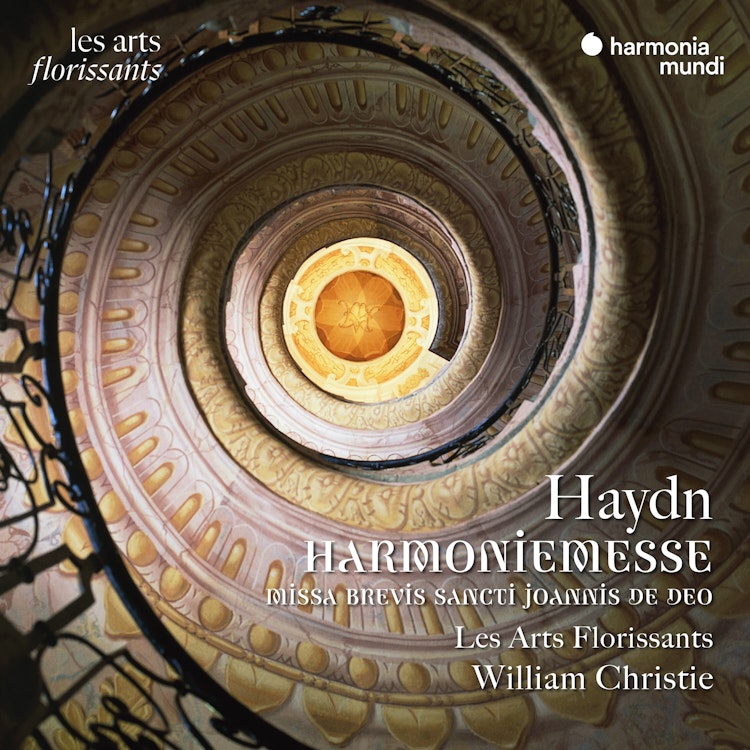
The Harmoniemesse's nickname reflects its colorful wind scoring, which is the most elaborate in all of Haydn's late masses, featuring a flute and pairs of oboes, clarinets, bassoons, and horns.
Recording & Production
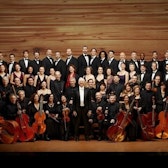
This recording was made on March 6 and 7, 2025, in the Grande Salle Pierre Boulez at the Philharmonie de Paris, France.
Historical Context
The musical style of Haydn's masses is compared to the luminous rococo interiors of churches like Ottobeuren or St Peter's Abbey in Salzburg, designed to inspire faith through grace and delight, not fear.
Composition History
The Harmoniemesse, or 'Wind-Band Mass', was the last of six masses Haydn composed annually for Prince Nicolaus II Esterházy to celebrate his wife's name day.
Composer's Artistic Vision
Haydn responded to criticism of his masses by stating that his heart would 'leap for joy' whenever he thought of God, indicating his optimistic religious faith.
Composer Biography
Joseph Haydn remained a devout Catholic throughout his life, despite criticisms of his masses for their perceived worldliness.
You might also enjoy...
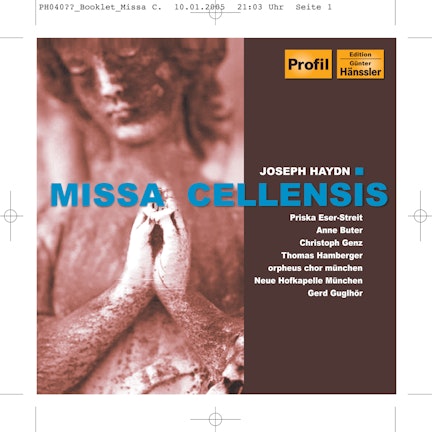
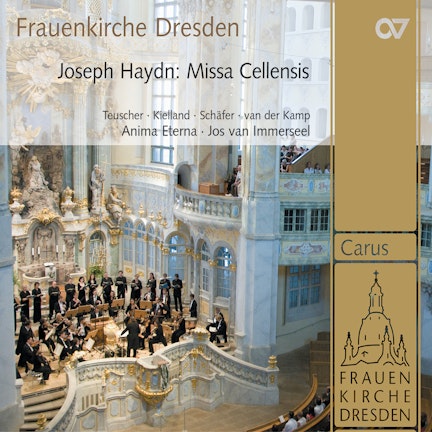
Haydn: Mass No. 3 in C Major, "Missa Cellensis"
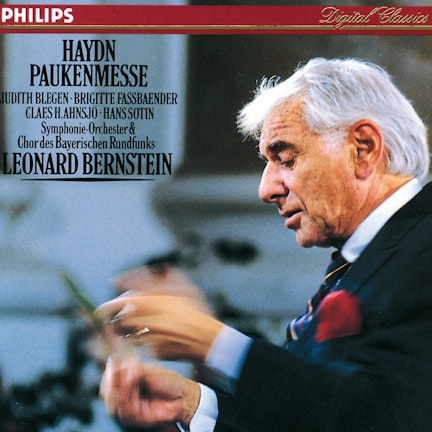
Haydn: Mass in C "Missa in Tempore Belli"
Haydn: Missa Cellensis in honorem Beatissimae Virginis Mariae, Hob. XXII:5
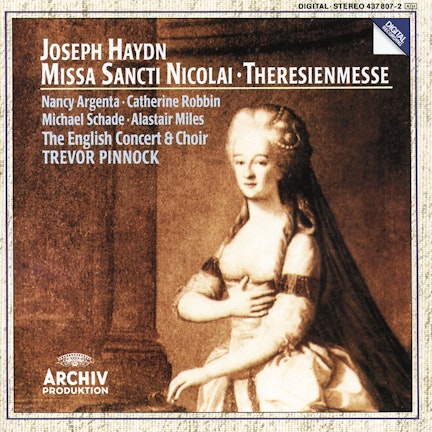
Haydn: Missa Sancti Nicolai; Theresienmesse
Haydn: Mass in C Major, Hob. XXV:5 "Missa Cellensis"