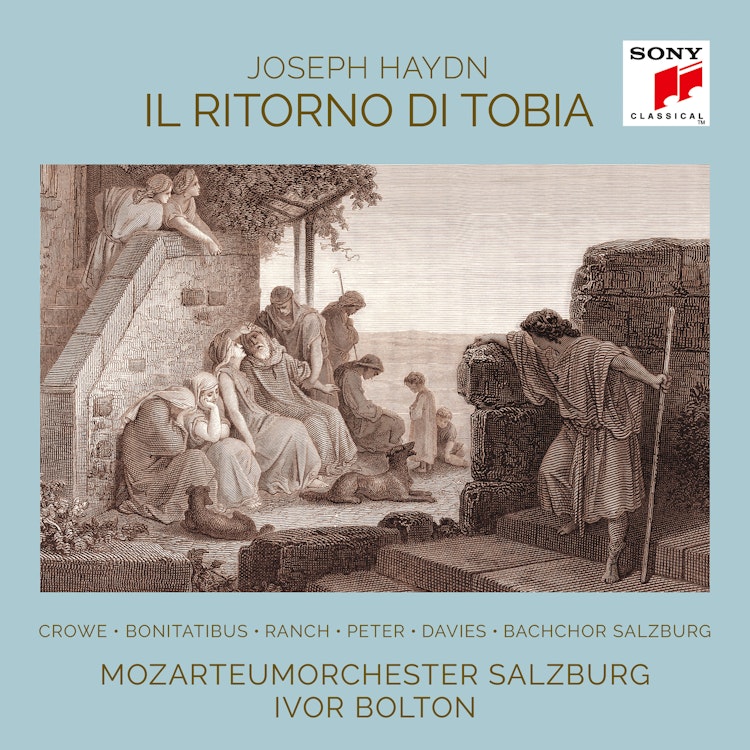
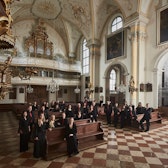
Joseph Haydn’s first oratorio – written some 25 years before The Creation or The Seasons – was Il ritorno di Tobia of 1775, the story of Tobias, who had been presumed dead, and the healing of his blind father. Renowned for their interpretations of Classical-period music, The Mozarteum Orchester Salzburg and Ivor Bolton are joined by a stellar cast including Mauro Peter and Lucy Crowe.
Featuring
Lucy Crowe
Anna Bonitatibus
Mauro Peter
Bettina Ranch
Neal Davies
Ivor Bolton
Bachchor Salzburg
Mozarteumorchester Salzburg
Joseph Haydn
Did you know?
1/7
Composition History
The libretto for 'Il ritorno di Tobia' was written by Giovanni Gastone Boccherini, a dancer, choreographer, and poet, and brother of the more famous composer Luigi Boccherini.
Compositional Technique
The score of 'Il ritorno di Tobia' is full of dramatic verve, with recitatives often accompanied by the entire orchestra, and arias featuring highly virtuosic coloratura and ornamentation.
Notable Performances
The premiere of 'Il ritorno di Tobia' was a benefit concert for widows and orphans, featuring over 180 musicians and singers, and lasting more than three hours, including a cello concerto.
Composition History
Joseph Haydn's oratorio 'Il ritorno di Tobia' was commissioned by the Viennese Tonkünstler-Societät, a musicians' benevolent society.
Composition History
Haydn revised 'Il ritorno di Tobia' in 1784, adding two festive choruses ('Ah gran Dio' and 'Svanisce in un momento') and streamlining vocal parts, but this second version was largely forgotten.
Historical Context
Italian was the fashionable language in Viennese high society at the time of the oratorio's composition, influencing the choice of language for 'Il ritorno di Tobia' and even for translations of Handel's oratorios.
Critical Reception
At its 1775 premiere in Vienna, 'Il ritorno di Tobia' was acclaimed by the audience, with critics praising its 'expression, nature and art' and comparing its choruses to Handel's.
You might also enjoy...
Haydn: Die Jahreszeiten, Hob. XXI:3
Honegger: Roi David (Le)
Haydn: The Seasons
Haydn: Jahreszeiten (Die) (The Seasons)
Haydn: Die Schöpfung (The Creation)
Britten: The Burning Fiery Furnace (The Complete Works)
Handel: SAUL (English Oratorio in three acts, performed according to the traditions of the time)