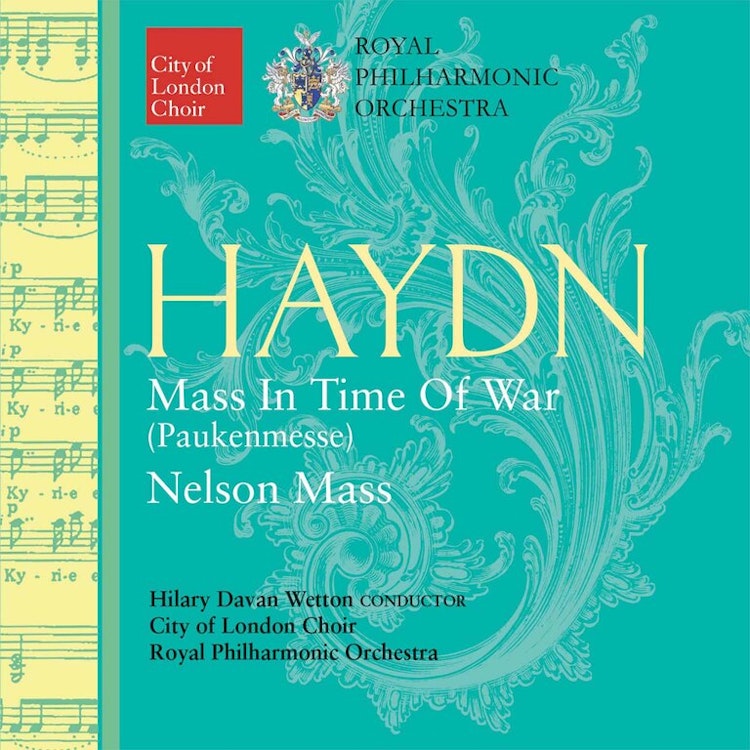
Franz Joseph Haydn, the composer, wrote six large-scale masses, including the two on this album, between 1796 and 1802, which were the sole output of his last active years.
Historical Context
Haydn's Mass in Time of War was composed in 1796 when Austria faced imminent invasion during the European war that followed the French Revolution.
Notable Performances
The 'Nelson' Mass received its nickname because Admiral Lord Nelson and Lady Hamilton visited the Esterházys in 1801, and a performance of the Mass was given in their honour.
Compositional Technique
The 'Nelson' Mass has striking scoring, with Haydn writing parts only for voices, strings, organ, three trumpets, and timpani, notably omitting wind parts.
Performer Biography
The Royal Philharmonic Orchestra (RPO), featured on this recording, has been a leading UK music-making institution since its formation in 1946 and is known as 'Britain's national orchestra'.
Composition History
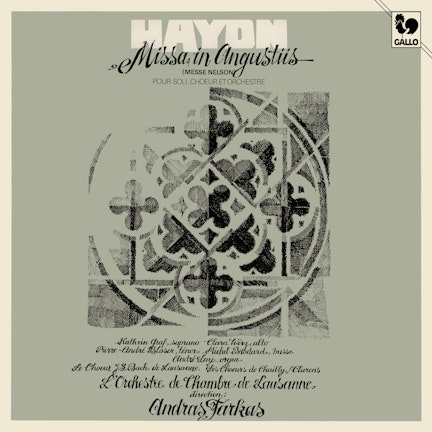
Haydn's 'Nelson' Mass was originally titled Missa in Angustiis ('Mass in time of fear') by the composer, reflecting the period of devastating wars during which it was written.
Compositional Technique
The Mass in Time of War acquired its nickname 'Paukenmesse' (Timpani Mass) due to the prominent role of the timpani, especially in the Agnus Dei, which may have been inspired by thoughts of war.
You might also enjoy...
Mozart: Mass in C minor, K.427
Mozart: Great Mass in C minor K.427
Haydn: Creation Mass
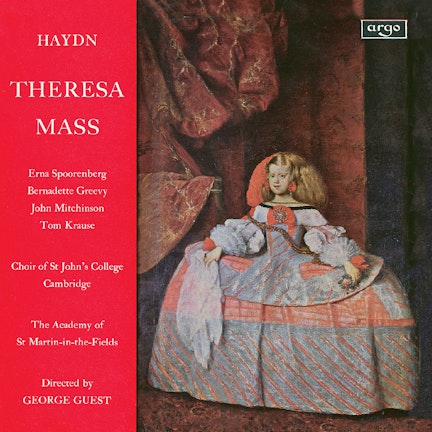
Haydn: Mass No.12 "Theresienmesse"
Haydn: Masses, Vol. 2 - Mass No. 3, "Cacilienmesse"
Wolfgang Amadeus Mozart: Mass No. 18, "Great" (Koch)
Mozart: Great Mass in C Minor "Grosse Messe"
Haydn: Missa in Angustiis "Nelson Mass" (Live)
Mozart: Mass in C Minor
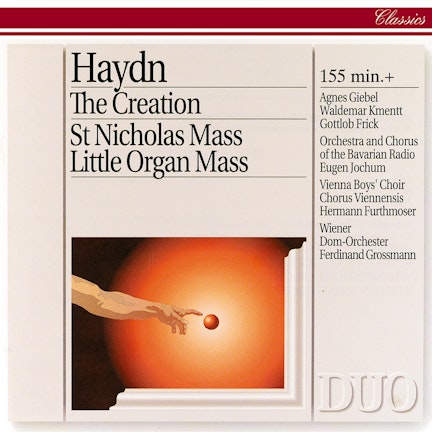
Haydn: The Creation; St. Nicholas Mass; Little Organ Mass
Mozart: Great Choral Works
Haydn: Cecilia-Mass; Mass in time of war; Little Organ Mass