Haydn's piano music was primarily influenced by the Viennese composer Georg Christoph Wagenseil, who contributed significantly to sonata form, rather than C.P.E. Bach, as is often believed.
Composition History
Haydn's extensive output of keyboard works around 1776 was partly due to his patron, Prince Esterházy, losing interest in the baryton, an instrument Haydn was previously obliged to compose for.
Composition History
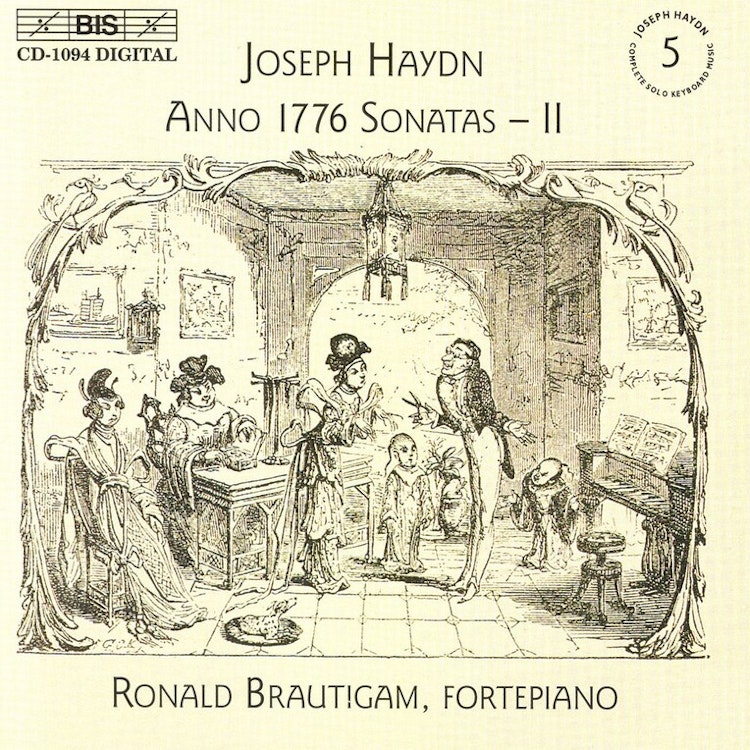
The 'Anno 1776 Sonatas' are named after the year Haydn himself stated they 'appeared', not necessarily the year they were composed.
Interpretation
Haydn's sonatas were intended for Viennese amateur circles, and he sometimes included a minuet instead of a slow movement, as he believed amateurs might lack the knowledge of ornamentation required for an Adagio.
Historical Context
Haydn lived more than twice as long as Mozart; his life spanned from when Bach and Handel were in their creative prime to when Beethoven had already composed his 'Pastoral' Symphony.
Composer Biography
Joseph Haydn, often called 'Papa Haydn', was once rumored to have died at age 73, prompting funeral compositions and masses in Paris, to which he humorously responded he would have conducted the mass himself.
Performer Biography
Ronald Brautigam, the fortepiano performer on this album, was awarded the Netherlands Music Prize in 1984 and is known for his acclaimed recordings of Mozart's solo keyboard music.