The Capriccio in G major, Hob. XVII: 1, was composed in 1765 but was mistakenly thought to have been written twenty years later until its autograph manuscript was discovered around 1932.
Interpretation
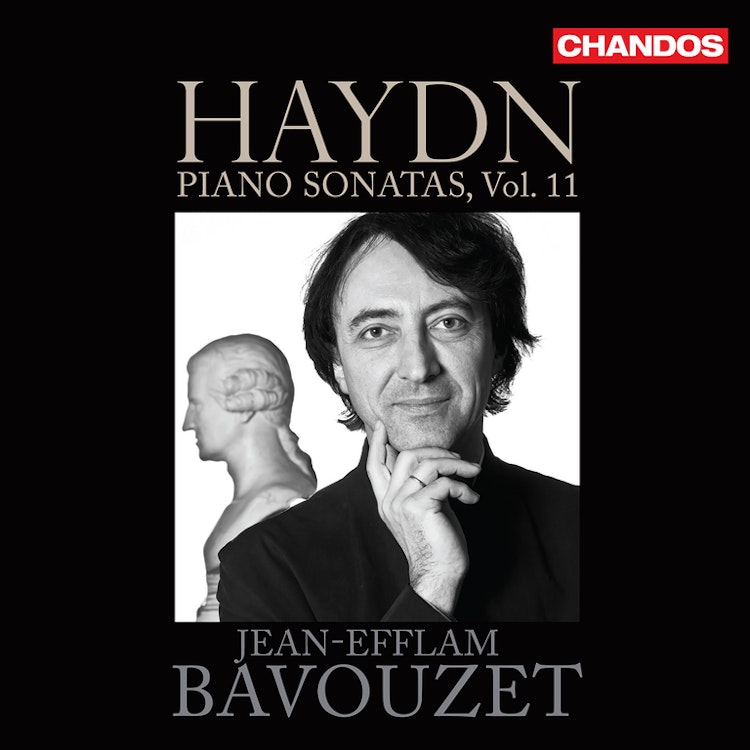
The performer, Jean-Efflam Bavouzet, uses modern technology to achieve the effect of a note fading to nothing, as requested by Haydn, while still playing it powerfully.
Compositional Technique
Haydn's Sonata No. 62 in E flat major features chords of eight notes and exploits the extreme high and low registers of the keyboard, demonstrating the evolution of keyboard writing.
Composer's Artistic Vision
Haydn's Fantasia in C major and Capriccio in G major show the influence of Carl Philipp Emanuel Bach, particularly his fantasies, with harmonic audacity and endless modulations.
Compositional Technique
Haydn's Capriccio in G major is based on a bawdy folksong titled 'Acht Sauschneider müssen seyn' (Eight men are needed to castrate a boar), which returns fourteen times in the piece.
Compositional Technique
The Fantasia in C major, Hob. XVII: 4, includes an instruction to hold a low note 'until the sound has become inaudible,' implying it was intended for a piano, not a harpsichord.
Recording & Production
This album is the final volume in a series presenting Haydn's sonatas not chronologically, but as collections juxtaposing works from different periods.
You might also enjoy...
Haydn, F.J.: Keyboard Sonatas - Nos. 47, 53, 62
Haydn: Piano Sonatas, Vol. 8
Haydn, Mozart & Handel: Piano Sonatas & Suites
Joseph Haydn: Piano Music Volume IV
Haydn, J.: Varations in F minor / 3 Sonatas played on square pianos of the period