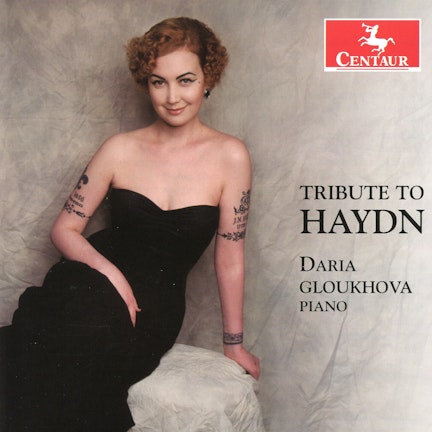
The Sonata No. 58 in C major, one of Haydn's last five sonatas, was commissioned in 1789 by Breitkopf, a Leipzig publisher, to improve a 'musical potpourri' collection.
Composer Biography
Franz Joseph Haydn, after leaving St Stephen's Cathedral in 1749-50, earned a living by teaching harpsichord, especially to ladies, which led to the creation of his early sonatas.
Compositional Technique
The Presto movement of Sonata No. 58 is a unique monothematic sonata-rondo among Haydn's sonatas, and its piano writing, with parallel thirds and octaves, is compared to Beethoven and Clementi rather than Mozart.
Composition History
Haydn's early sonatas were not always called 'sonata' in their sources, but rather 'divertimento' or 'partita', with the term 'sonata' first appearing in an autograph from 1771.
Compositional Technique
The second movement of Sonata No. 46, an Allegretto in E minor, was considered odd by publisher Hummel and suppressed in early editions, but is now seen as a blend of baroque and modern styles, possibly a retort to critics.
Performer Biography
Jean-Efflam Bavouzet, the pianist on this album, is a multi-award-winning artist, considered Sir Georg Solti's last discovery, and records exclusively for Chandos.
Composition History
Only four of Haydn's first eighteen sonatas, classified by Christa Landon, are considered absolutely authentic, with others being of dubious authenticity or apocryphal.