The term 'Sturm und Drang' (Storm and Stress) is often used for Haydn's symphonies from 1767-1772 due to their expressive depth and dramatic elements, but this term is problematic as the symphonies predate the literary movement and Haydn likely had no interest in it.
Instruments
Haydn's Trumpet Concerto Hob. VIIe:1, his final orchestral work from 1796, was written for a newly invented 'keyed trumpet' or 'organized trumpet', which offered a greatly increased range of notes compared to natural trumpets.
Composition History
Haydn's Symphonies Nos. 6-8, known as 'Le Matin', 'Le Midi', and 'Le Soir', were likely composed in 1761 and were inspired by the 'times of the day'.
Composition History
Haydn's 'Farewell' Symphony No. 45, composed in 1772, famously ends with musicians gradually stopping playing until only two violins remain, an unusual idea possibly meant to signal the musicians' desire to return home.
Composer Biography
Joseph Haydn began his lifelong association with the Esterházy princes in May 1761, initially as assistant Kapellmeister responsible for instrumental and secular vocal music.
Compositional Technique
The symphonies from Haydn's early Esterházy years, particularly Nos. 6-8, feature many concertante passages for all instruments, making instrumental virtuosity a key characteristic.
Compositional Technique
Haydn's 'Sturm und Drang' symphonies often feature minor keys, dynamic contrasts, unexpected harmonic modulations, metrical irregularities, and menacing unison figures, influenced by Italian opera.
You might also enjoy...
Haydn - Pinnock: Complete Recordings
Haydn: Symphonies, Vol. 7
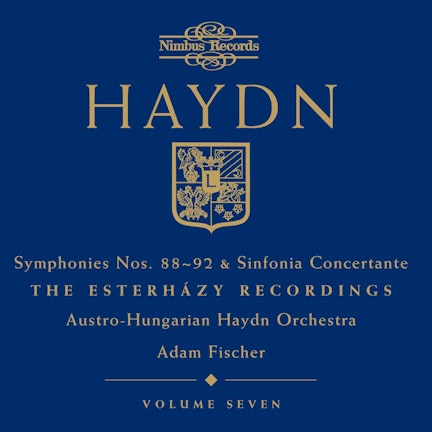
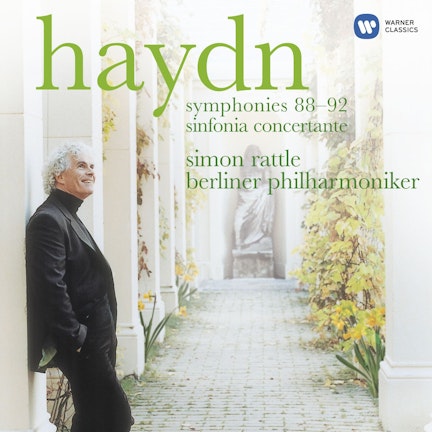
Haydn: Symphonies Nos 88-92 & Sinfonia Concertante
Haydn: Symphonies No. 94 "La Surprise",No. 100 "Militaire",No. 101 "L'Horloge",No. 104 "Londres" & Concerto pour Trompette