Pope Benedict XIII established the new feast of the 'Septem Dolorum Beatae Mariae Virginis' (Commemoration of the Seven Sorrows of Mary) in 1727, designating the Stabat Mater as a sequence within the Mass for that day.
Composition History
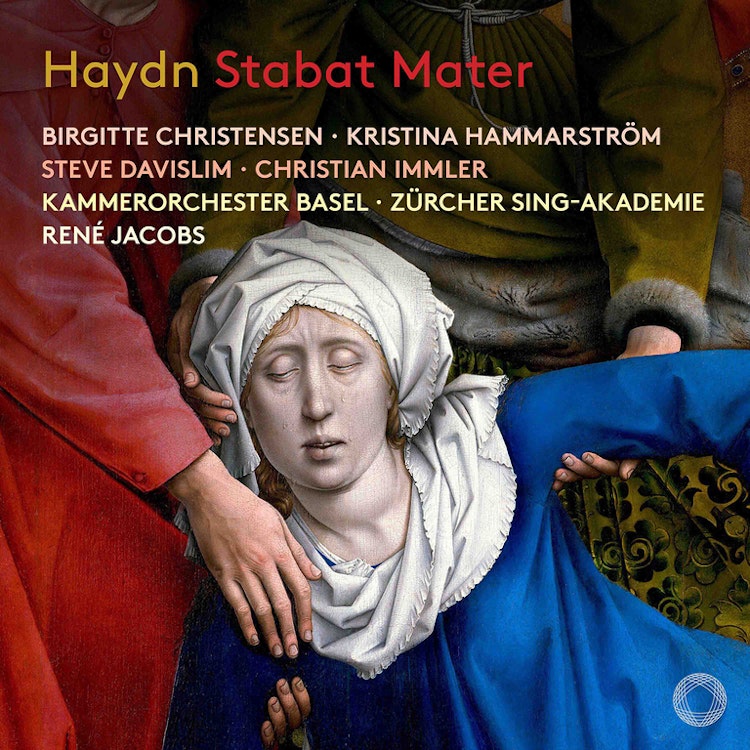
Joseph Haydn's Stabat Mater was likely premiered on Good Friday, April 17, 1767, in the Schlosskirche in Eisenstadt.
Instruments
The violone played on this recording is a Johann Joseph Stadelmann from 1759, kindly provided by Privatstiftung Esterhazy in Eisenstadt.
Historical Context
The Stabat Mater text, a medieval sequence, was removed from the Missale Romanum (the Catholic Church's liturgy book) in the 16th century due to Catholic reformers at the Council of Trent.
Composition History
Haydn commissioned his pupil Sigismund Neukomm to expand the orchestration of his Stabat Mater in 1803, adding instruments like flute, clarinets, bassoons, horns, trumpets, timpani, and trombones.
Compositional Technique
Haydn's Stabat Mater uses a balance of minor and major keys, with half of its 14 movements in minor and half in major, and concludes with a radiant G Major fugue.
Critical Reception
Haydn's Stabat Mater was praised in a 1783 Hamburg music journal, Cramer's Magazin der Musik, for its 'touching beauty' and 'correct expression,' noting its ability to survive alongside Pergolesi's version.
You might also enjoy...
Berlioz: Messe solennelle
Mayr: Messa di gloria in E Minor & Messa di gloria in F Minor