Bartók's String Quartet No. 4 employs a wide variety of playing techniques, including muted strings, playing near the bridge, playing without vibrato, hitting strings with the bow wood, glissandos, and flageolets.
Composition History
After their completion in 1797, Count Joseph Erdödy had exclusive rights to perform Haydn's Op. 76 quartets privately for two years before their publication.
Composition History
Joseph Haydn's String Quartet Op. 76 No. 2 was commissioned by Count Joseph Erdödy, a Hungarian Chancellor who maintained his own chamber music ensemble.
Performer Biography
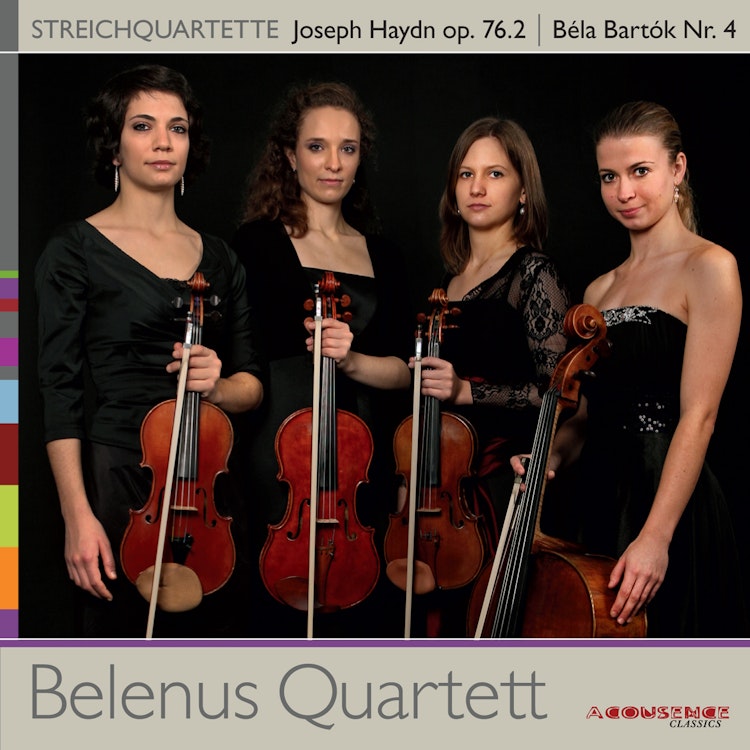
The Belenus Quartett, founded in 2004, has won several awards, including the 'Orpheus Swiss Chamber Music Competition' in 2011 and 2012, and a special prize for Haydn interpretation at the 'Sándor Végh Competition' 2012.
Composer's Artistic Vision
Béla Bartók stated that in his newer works, including String Quartet No. 4, he used more counterpoint to avoid the primarily homophonic formulas of the 19th century.
Compositional Technique
Haydn's String Quartet Op. 76 No. 2 is known as the 'Quinten (Fifths) quartet' because all four movements subtly feature similar thematic material, specifically falling perfect fifths.
Compositional Technique
Béla Bartók's String Quartet No. 4 is symmetrically structured, with the slow third movement as the core, movements 2 and 4 forming an inner layer, and movements 1 and 5 forming the outer layer.
You might also enjoy...
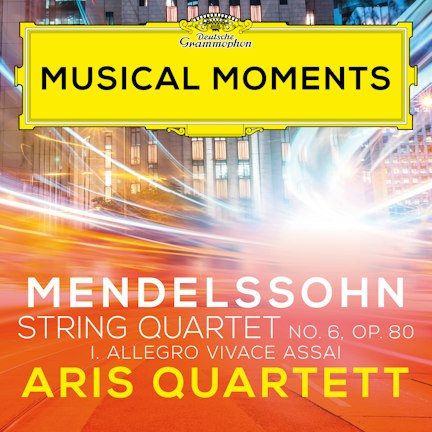
Mendelssohn: String Quartet No. 6 in F Minor, Op. 80: I. Allegro vivace assai – Presto (Musical Moments)
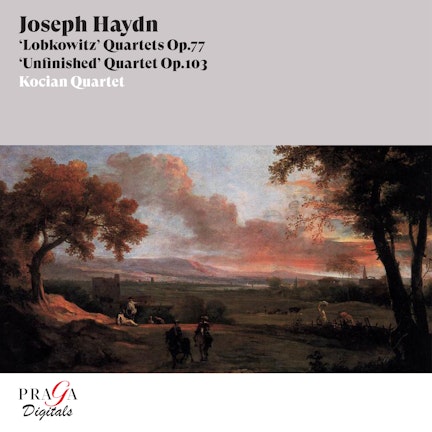
Joseph Haydn: Lobkowitz Quartets, Op. 77, Unfinished Quartet, Op. 103