Joseph Haydn spent much of his career at the Esterházy court in Kismarton, Hungary, entering their service in 1761.
Instruments
The nickname 'The Clock' for Symphony No. 101 refers to the ticking accompanimental figure in its Andante second movement, reminiscent of a Flötenuhr or 'flute clock'.
Recording & Production
This album was recorded at Usher Hall in Edinburgh, UK, over several days in January and February 2015.
Historical Context
Symphony No. 70 was written to mark the re-laying of the foundation stone for the Eszterháza opera house, which had been destroyed by fire in November 1779.
Compositional Technique
Symphony No. 31, 'Hornsignal', is one of only four of Haydn's symphonies that uses a quartet of horns, a luxury at the time.
Composer's Artistic Vision
Haydn believed the isolation of Eszterháza, Prince Esterházy's palace, was an advantage, forcing him to become original in his compositions.
Performer Biography
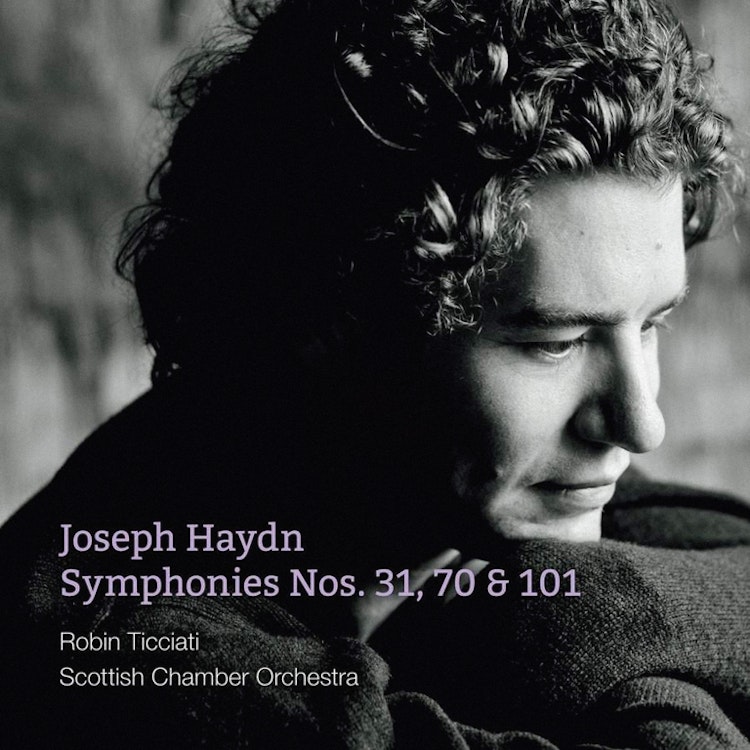
Robin Ticciati, the conductor, became the youngest conductor to appear at La Scala Milan and the Salzburg Festival.
You might also enjoy...
Haydn: Symphonies Nos. 6, "Le matin", 7 "Le midi" & 8 "Le soir"
Haydn : Symphonies Nos 45 & 60
Haydn: Symphonies Nos. 45, 94 and 101
Haydn: Symphony No. 31
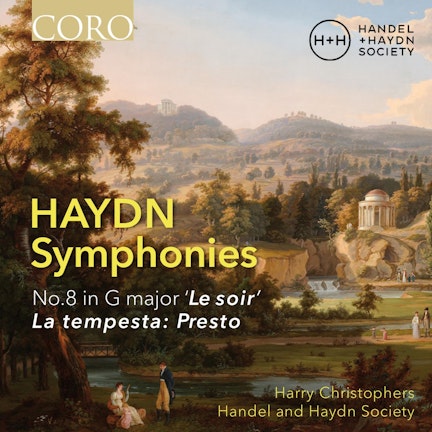
Haydn: Symphony No. 8 in G Major, Hob. I:8 "Le Soir": IV. La tempesta - Presto