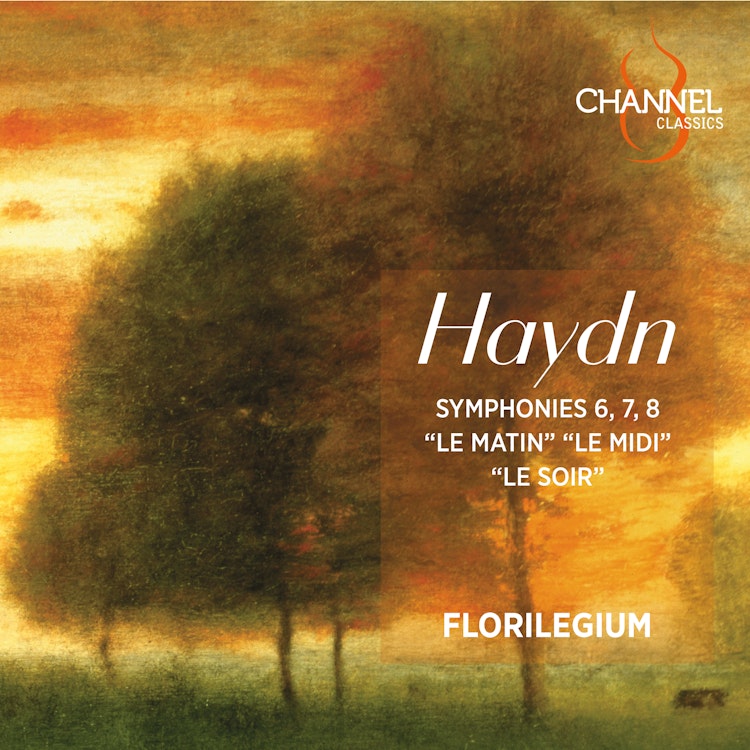
Haydn: Symphonies Nos. 6, 7, 8 "Le Matin", "Le midi", "Le Soir"
10/28/2022, 12 Tracks, 1:10:10
Featuring
Ashley Solomon
Florilegium
Joseph Haydn
Did you know?
1/7
Composer's Artistic Vision
Haydn's symphonies for the Esterházy court featured extensive and elaborate solos for all his first-chair players, blurring the line between concerto and symphony and revealing his lifelong penchant for novelty.
Composer Biography
Franz Joseph Haydn began his musical career singing in a choir at age six and was a freelance musician in Vienna by 18, studying counterpoint and composing his first instrumental works.
Historical Context
Musicians at the Esterházy court, including Haydn, were effectively the sole property of the court, receiving good salaries, food, lodging, and health care in return for their full-time service to the prince.
Composition History
Haydn was hired by the Esterházy family, one of the wealthiest and most influential families in the Austrian empire, at the age of 29.
Performer Biography
Florilegium, formed in 1991, is one of Britain's most outstanding period instrument ensembles, known for stylish and exciting interpretations from chamber works to large-scale orchestral repertoire.
Composition History
The idea for these 'Morning, Noon, and Night' symphonies may have come from Prince Esterházy, possibly inspired by a fashionable pantomime ballet or by Vivaldi's 'The Four Seasons' from his own music collection.
Compositional Technique
Haydn adopted the latest fashion of the four-movement symphony by adding the minuet and trio, a practice he maintained in nearly all his subsequent hundred or so symphonies.