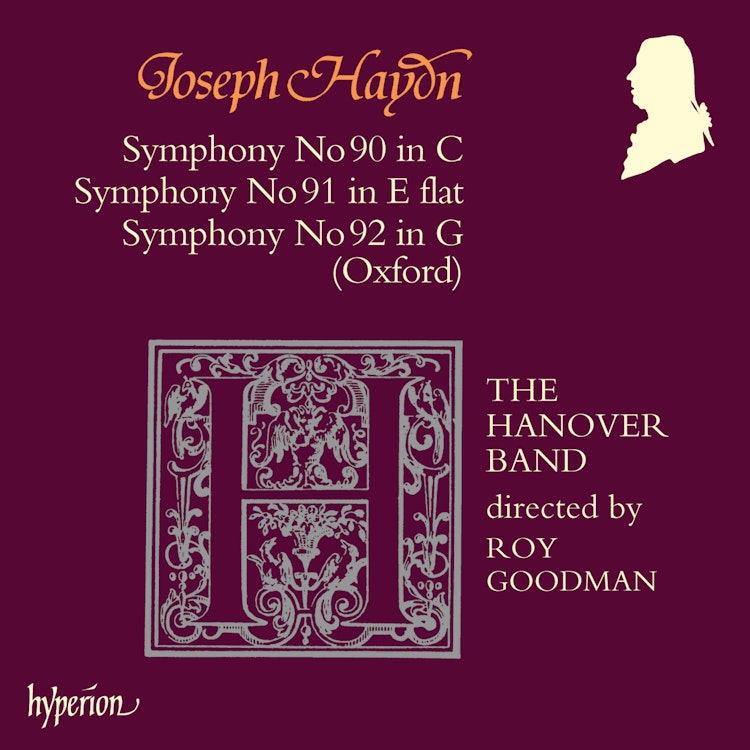
Haydn received a commission from Prince Krafft-Ernst of Oettingen-Wallerstein for three symphonies, which he fulfilled by also using them for a similar commission from the Comte d'Ogny.
Composition History
Before the 1780s, most of Haydn's symphonies were written for his employer, Prince Nikolaus Esterházy, at his residences in Eisenstadt and Eszterháza.
Composition History
Haydn cunningly sent only orchestral parts to Prince Krafft-Ernst, claiming the scores were illegible due to his bad eyesight, after having sent the only autograph copies to Paris.
Interpretation
Conductor Roy Goodman reassessed the tempo of Andante and Minuet movements, which are often performed too slowly today, based on tempo markings by Hummel and Czerny.
Interpretation
The Hanover Band performs on period instruments at a pitch of A = 430Hz, and the conductor Roy Goodman directs symphonies 1 to 92 from the harpsichord.
Notable Performances
Symphony No. 92 gained its nickname 'Oxford' after Haydn conducted it in the Sheldonian Theatre in July 1791, upon receiving an honorary doctorate from the University of Oxford.
Composer Biography
Haydn, acting as a businessman, fulfilled two commissions for symphonies (from Prince Krafft-Ernst and Comte d'Ogny) by writing only three works.