Haydn: The Seven Last Words of our Saviour on the Cross
2/1/2011, 10 Tracks, 1:04:51
Featuring
Vladimir Jurowski
Lisa Milne
Ruxandra Donose
Andrew Kennedy
Christopher Maltman
London Philharmonic Orchestra
London Philharmonic Choir
Joseph Haydn
Did you know?
1/7
Composition History
Haydn's oratorio, The Seven Last Words of our Saviour on the Cross, was originally commissioned as orchestral interludes for a Good Friday church service at Cádiz Cathedral in Spain in 1785.
Composition History
Haydn arranged the work for string quartet in 1787, which is the version most often played today.
Composition History
Haydn revised a choral version of the work after hearing an arrangement by local composer Joseph Friebert in Passau, stating, 'I think, I myself could have written the vocal parts better'.
Recording & Production
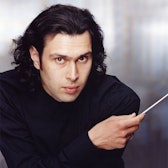
This recording, featuring Vladimir Jurowski as conductor, juxtaposes Haydn's original instrumental movements with the later choral versions, recorded live at the Royal Festival Hall in November 2009.
Compositional Technique
Haydn composed a new introduction for the second half of the piece, featuring only woodwind and brass instruments, including the 'hollow' tone of the contrabassoon, creating an 'alien' sound.
Composition History
The work was first conceived as an instrumental composition, titled 7 sonate, con un' introduzione, ed al fine un terremoto (Seven Sonatas, with an Introduction, and at the end an Earthquake).
Compositional Technique
In the choral version, Haydn added seven short, unaccompanied chorale-like episodes in an old-fashioned style, reminiscent of church chants, between the movements.
You might also enjoy...
Schubert: Lazarus, oder Die Feier der Auferstehung, D. 689