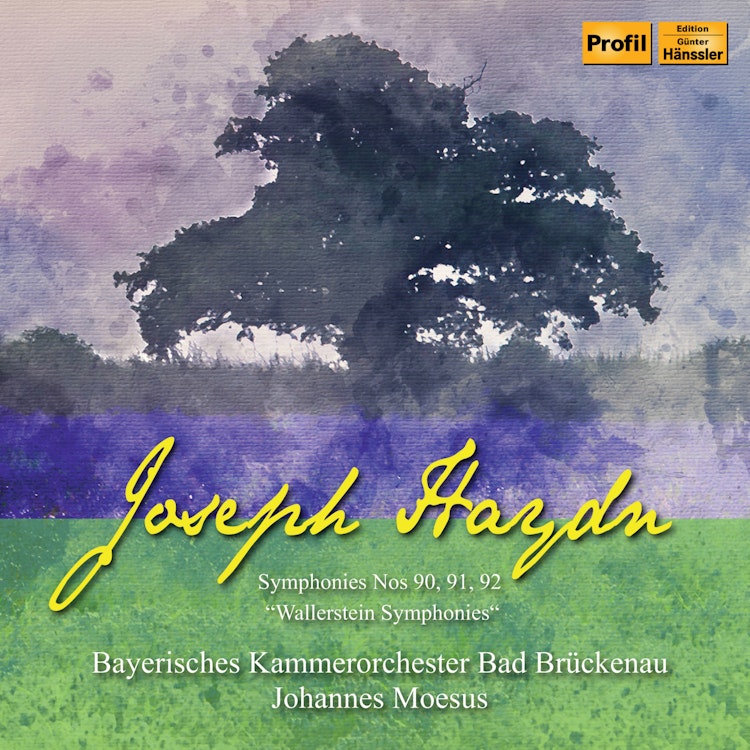
The symphonies Hob. I:90, I:91, and I:92 were conceived as a 'triptych' in the keys of the C minor chord (C - E flat - G).
Performer Biography
Johannes Moesus, the conductor, is a specialist in 18th and 19th-century symphonic music and has made many world premiere recordings.
Interpretation
Conductor Johannes Moesus prefers Haydn's original scorings without trumpets and timpani, believing they reflect Haydn's initial intentions and give the symphonies a more chamber-music quality.
Composition History
Haydn falsely claimed eye trouble to explain why he sent copies instead of original scores to Prince Kraft Ernst, when in reality he had sold the autograph scores to the Concert de la loge olympique in Paris for a better fee.
Performer Biography
The Bayerisches Kammerorchester Bad Brückenau, founded in 1979, consists of professional musicians from Central Europe and has worked with notable figures like Yehudi Menuhin and Arvo Pärt.
Composition History
Prince Kraft Ernst of Oettingen-Wallerstein commissioned Haydn to write three new symphonies in 1788, intending to be their sole owner.
Composer Biography
Haydn accepted the commission for the symphonies but initially delayed delivery due to other commitments, including writing six Notturni for the King of Naples and a new opera for his own prince.