Hindemith composed his major solo piano works, including these sonatas, in the second half of his career, after the Nazi campaign against his opera Mathis der Maler forced his emigration from Germany.
Composition History
The first two piano sonatas were largely composed during Hindemith's extended stay in Turkey, where he was organizing the national music school in Ankara at the invitation of the Turkish government.
Composer Biography
Paul Hindemith, a formidable executant on several instruments, once claimed he could play every instrument in the orchestra to some extent.
Composer's Artistic Vision
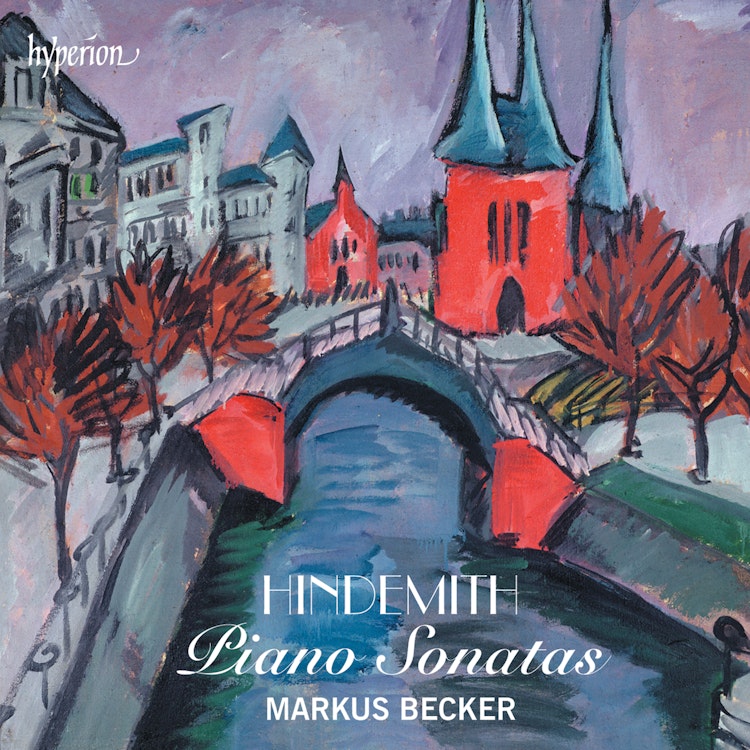
Hindemith's three piano sonatas, composed in 1936, reflect his theoretical work on The Craft of Musical Composition, where he established his approach to tonality, counterpoint, and formal structure.
Notable Performances
Nazi authorities forbade the planned performance of Hindemith's piano sonata in Germany, and no further public premieres for him occurred there until after World War II.
Critical Reception
The original second movement of Piano Sonata No. 1, titled 'Variations', was replaced at the request of pianist Walter Gieseking, who was scheduled to premiere the work.
Historical Context
Hindemith's turning to the Romantic poet Friedrich Hölderlin's texts in 1935 had both political and aesthetic dimensions, especially given the Nazi propaganda machine's distortion of Hölderlin's democratic ideals.
You might also enjoy...
Morgen
Roger-Ducasse: Piano Works
Roger-Ducasse: The Complete Piano Music
Hindemith: Das Klavierwerk, Vol. 2
Colour & Light: 20th-Century British Piano Music
Piano Recital: Lifchitz, Max - Ziffrin, M. / Bell, E. / Levin, R. / Worthington, R.
Enescu: Complete Works for Piano Solo
Ireland, J.: Piano Works, Vol. 3 - Piano Sonata / Preludes / Green Ways
Mendelssohn - Schubert - Schumann - Chopin
Ghedini: Complete Piano Music, Vol. 1
Ireland: Piano Works, Vol. 2
The Piano Music of John Ireland, Vol. 2
IRELAND, J.: Piano Works, Vol. 1 (Lenehan) - Sarnia / London Pieces / In those days