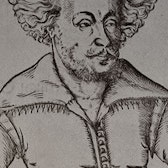
Heinrich Schütz intended to 'translate music' into words, adapting the specific characteristics of the German language into musical events.
Notable Performances
Schütz's Weihnachtshistorie (Christmas Historia) SWV 435 likely premiered on Christmas Day in 1660 in the old Dresden Schlosskapelle.
Interpretation
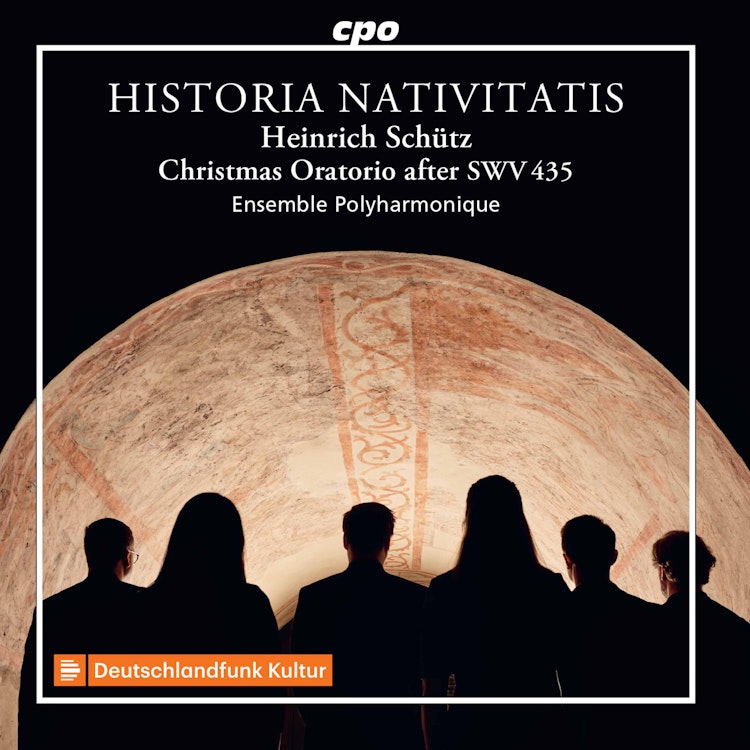
The Ensemble Polyharmonique created an alternative version of the Weihnachtshistorie, incorporating other contemporary Central German works to fill gaps and adapt to their ensemble.
Composition History
When Schütz published his Weihnachtshistorie (Christmas Historia) in 1664, it replaced an older Historia by his predecessor Rogier Michael, whose text Schütz largely adopted.
Composition History
Heinrich Schütz's Weihnachtshistorie (Christmas Historia) SWV 435 was composed after the Thirty Years' War at the request of Prince Elector Johann Georg II.
Compositional Technique
The Evangelist's part in Schütz's Weihnachtshistorie (Christmas Historia) SWV 435 uses 'Stylo Recitativo' with basso continuo, a new compositional style for Germany at the time.
Compositional Technique
Schütz's Weihnachtshistorie (Christmas Historia) SWV 435 was conceived for the Dresden Court Orchestra, requiring eleven vocal soloists and a diverse array of instruments.