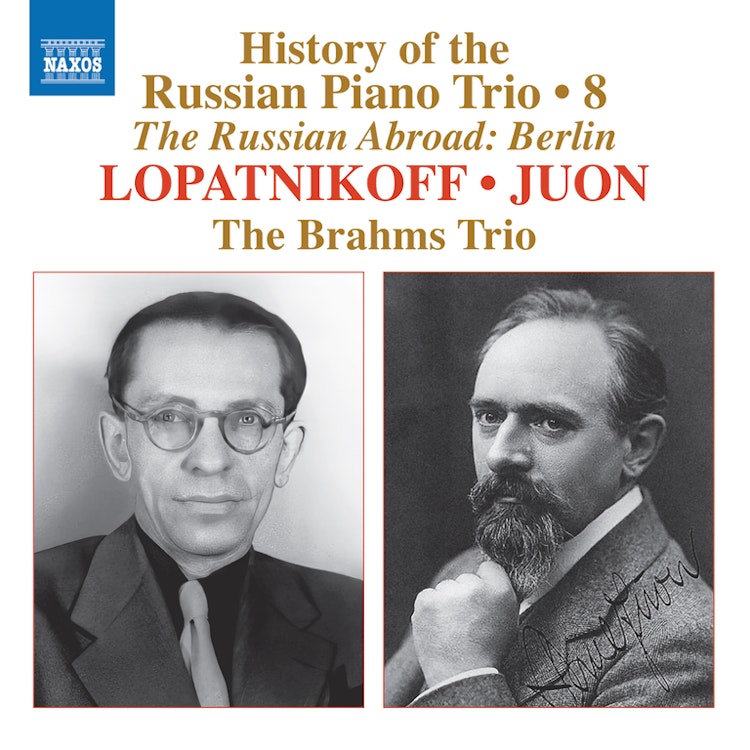
Nikolai Lopatnikoff, a peer of the 20th century, fled Russia after the 1917 Revolution and achieved European fame in Germany before his works faded from the repertoire in the mid-1950s.
Historical Context
The "Russian Abroad" refers to a 20th-century cultural phenomenon where Russian music developed in parallel streams in the USSR and other countries due to mass emigration after 1917.
Performer Biography
The Brahms Trio, one of Russia's leading chamber ensembles, has made an invaluable contribution to expanding the repertoire by rediscovering unknown Russian piano trios from the late 19th and early 20th centuries.
Composition History
Nikolai Lopatnikoff's Piano Trio in A minor, Op. 23, was written in 1932, the same year as his opera "Danton," whose premiere was cancelled due to the Nazis' rise to power.
Album & Artwork
This album is the third volume in a series titled "History of the Russian Piano Trio," focusing on the Berlin branch of the Russian Abroad.
Composer Biography
Paul Juon, a pupil of Jan Hřímalý, Anton Arensky, and Sergey Taneyev, renounced his Russian citizenship in 1917 and was subsequently erased from the history of Russian music by the Soviet regime.
Compositional Technique
Paul Juon's Piano Trio No. 1 in A minor, Op. 17, written in 1901, is notable for being one of the first Russian piano trios to be based on purely folk material, stylised historically.
You might also enjoy...
Jadassohn: Piano Trios Nos. 1-3
Canadian Premieres
Ries: Piano Trios
P. Juon: The Piano Trios
American Discoveries
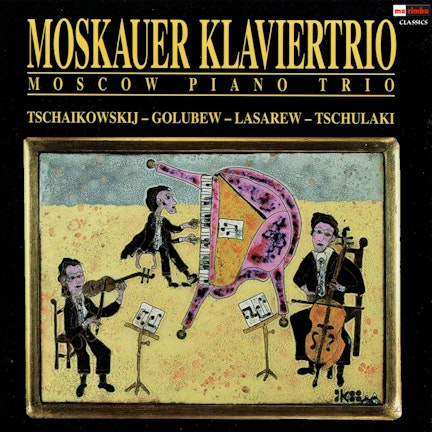
Tschaikowskij Golubew Lasarew Tschulaki
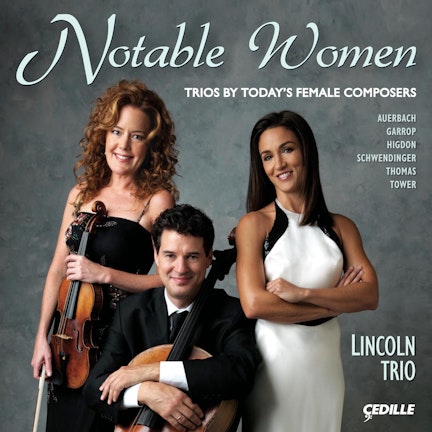
Notable Women
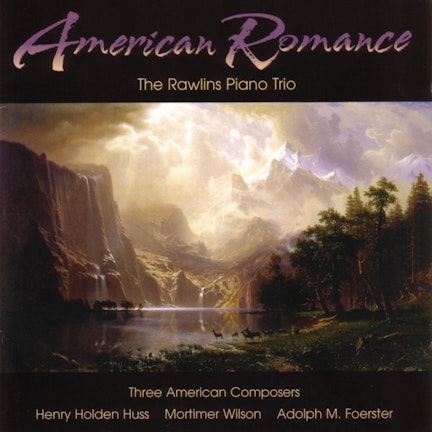
American Romance
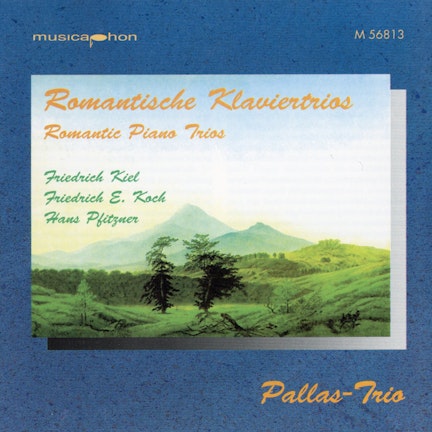
Romantic Piano Trios
French Moments
Ernest Alder: L'Opéra Concertant (Saint-Saëns, Thomas, Auber, Meyerbeer, Massenet)