Debussy's Preludes showcase his appreciation for the individual colors of his beloved Blüthner piano, particularly its pure bass, which he used for both whispered and thundering effects.
Compositional Technique
Debussy's Nocturne for piano includes a surprising central section in 7/4 metre, a rhythmic choice that could have come from Russian composers like Balakirev or Borodin.
Performer Biography
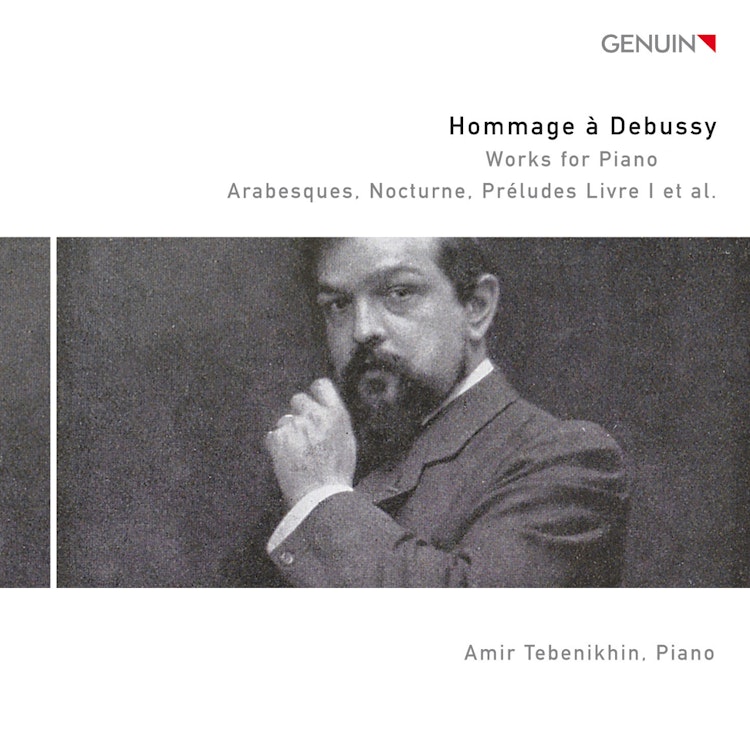
Amir Tebenikhin, the pianist on this album, has won numerous prestigious awards, including First Prize at the George Enescu International Piano Competition in 2009 and the German Piano Award in 2011.
Composition History
The manuscript of Debussy's Danse bohémienne remained with the von Meck family for over half a century until Nadezhda von Meck's grandson sold it in 1932 due to post-revolutionary impoverishment.
Composer Biography
As a teenager, Debussy worked as a musical tutor and household pianist for Nadezhda von Meck, Tchaikovsky's famous patroness, which may have inspired his early instrumental works.
Composer's Artistic Vision
Debussy's Preludes often feature pictorial titles placed at the end of each piece, and many are inspired by various forms of dance, from sarabands to ragtime.
Critical Reception
Debussy's two Arabesques, among his first piano pieces, initially sold poorly but sales skyrocketed after the success of his opera Pelléas et Mélisande.
You might also enjoy...
Debussy Piano Music Vol III
Debussy: Préludes Book 1; Children's Corner
Debussy, C.: Piano Music (Devoted To Debussy)
Debussy: Complete Works for Solo Piano, Vol.1
debussy integrale inachevee
Debussy, C.: Piano Music (Complete)
Debussy: Images
Debussy: The Complete Piano Music
Debussy: Piano Works, Vol. 1
Belle Epoque: Debussy Intégrale de l'œuvre pour piano II