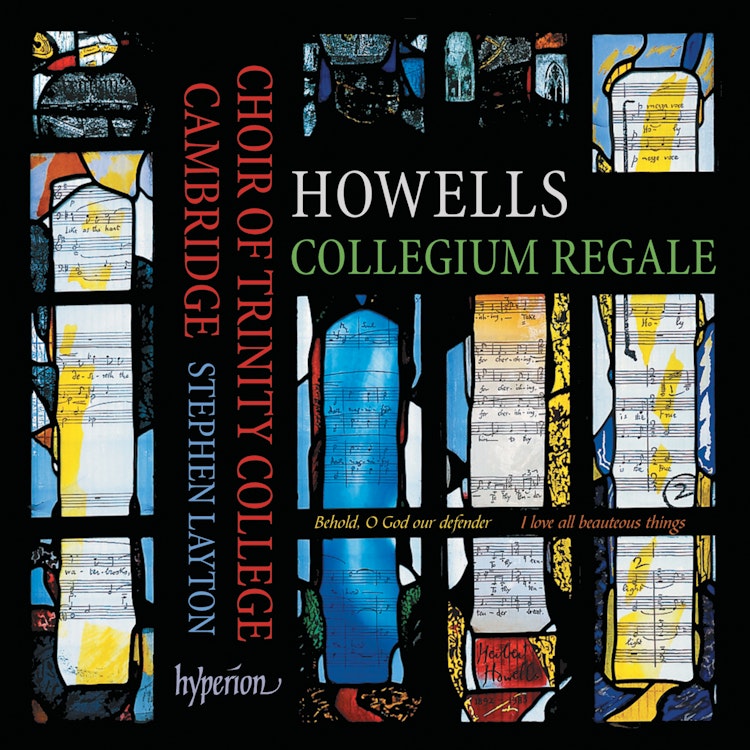
The opportunity to re-engage with church music in Cambridge had a profound effect on Howells's career, initiating a body of music that placed him at the pinnacle of 20th-century Anglican church composers.
Composition History
Eric Milner-White, Dean of King's College from 1919 to 1941, challenged Howells to revitalize English church music composition, a seed that flowered in the form of liturgical settings for King's chapel.
Composer Biography
By 1941, Howells's career was in a slump, and he was still recovering from the tragic death of his son, Michael, from polio in 1935.
Compositional Technique
Howells unified the complete Collegium Regale settings by using thematic material from the morning and evening services in the Holy Communion order, with the Kyrie reprising Magnificat chords and the Gloria using Te Deum music.
Composer's Artistic Vision
Howells promised that his settings of the Magnificat and Nunc dimittis would reflect specific characteristics, such as the Magnificat's 'feminine association' and the Nunc dimittis's gentle Simeon, with only the Gloria raising its voice.
Composer Biography
Herbert Howells, the composer, temporarily held the post of organist at St John's College, Cambridge, from 1941 to 1945, standing in for Robin Orr who was on active service.
Composition History
Howells composed 'Behold, O God our defender' as a short Introit for the Coronation Service of Queen Elizabeth II in 1952, completing it on Christmas Day that year.
You might also enjoy...
Emanuel Kirschner - Synagogue Chants
Let All the World in Every Corner Sing
Liszt: Choral Music
Cras, J.: Mass in D Minor / Dans La Montagne / Hymne En L'Honneur D'Une Sainte / Panis Angelicus / Ave Verum / Ave Maria / Regina Coeli
Stravinsky: Symphony of Psalms / Boulanger, L.: Psalms
Martin: Jubilate Deo
Mathias: Choral Music
A New England Requiem: Sacred Choral Music by Scott Perkins
Elgar: Choral Works
Howells: Choral Music
Kenneth Leighton: The World's Desire & Other Choral Works