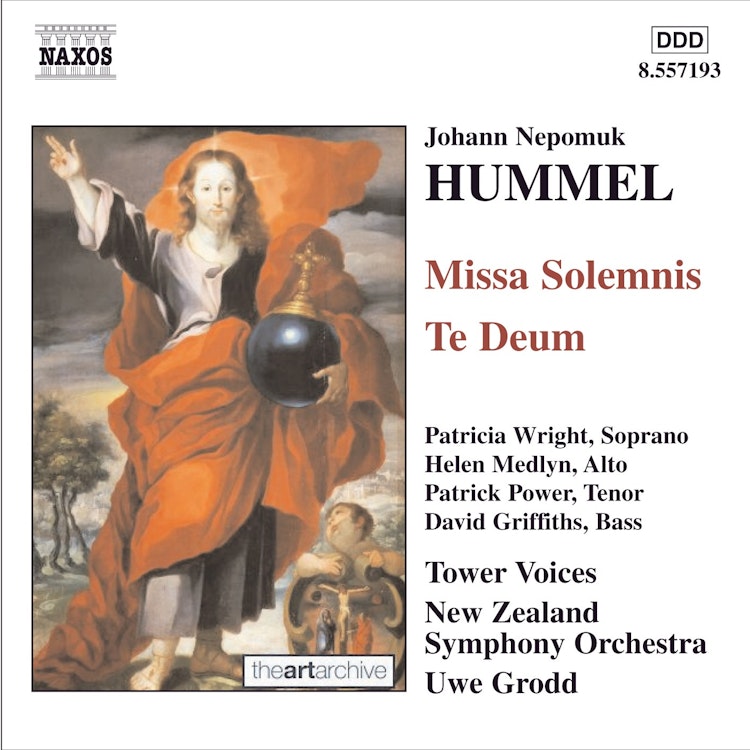
Johann Nepomuk Hummel, a former pupil of Mozart, was recommended by Joseph Haydn to be Concertmeister at the Esterházy court in 1803.
Composition History
The Te Deum was likely composed to celebrate the Treaty of Pressburg, signed on December 26, 1805, which ended the war between the Austro-Russian Alliance and France.
Compositional Technique
The Missa Solemnis is noted for its brilliant orchestration, inventive and flexible choral writing, and technical resourcefulness, building on the tradition of late Haydn Masses.
Recording & Production
This recording of Hummel's Te Deum is based on the original readings from the autograph score, as later revisions appeared to be inferior.
Compositional Technique
In the Gloria of the Missa Solemnis, Hummel uses a single large-scale movement unified by a recurring theme, rather than the conventional division into multiple sections.
Composition History
Hummel's Missa Solemnis in C was composed for the wedding of Princess Leopoldina Esterházy, daughter of Prince Nicolaus II, in March 1806.
Composition History
Prince Nicolaus II Esterházy, a patron with a strong interest in church music, instigated the tradition of commissioning a new Mass annually for his wife's name-day.
You might also enjoy...
Haydn: Masses Nos. 1B and 3
Mozart: Missa Longa; Inter Natos Mulierum; Te Deum Laudamus; Venite Populi; Regina Coeli
Mozart: Ave Verum Corpus / Sacred Music
Mozart: Requiem / Choral Works
Mozart: Shorter Sacred Works
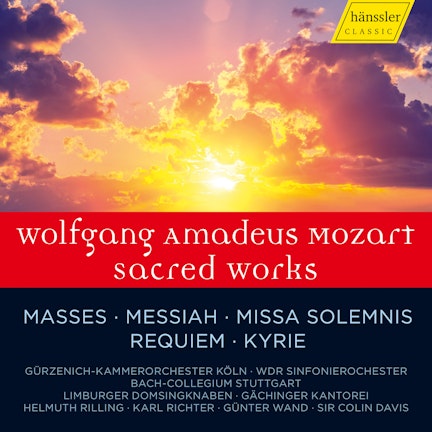
Mozart: Sacred Works
Haydn: Die Schöpfung; Heiligmesse; Theresienmesse; Nelsonmesse; Paukenmesse etc.
Haydn, M.: Requiem in C Minor / Missa Sancti Joannis Nepomuceni / Te Deum in D Major