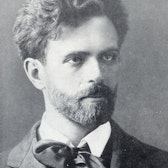
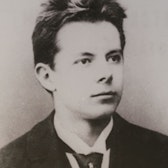
Béla Bartók became one of the founders of Slovak and Romanian ethnomusicology after being intrigued by the folk music of these minority groups in the Hungarian Kingdom.
Composer Biography
György Ligeti, another composer on this album, followed in the footsteps of Bartók and Kodály by collecting folk music in Transylvania and working for the Institute for Folklore in Bucharest.
Performer Biography
Katalin Károlyi, the mezzo-soprano on this album, had György Ligeti compose the cycle Síppal, dobbal, nádihegedűvel for her and the Amadinda Percussion Group in 2000.
Composer's Artistic Vision
Zoltán Kodály and Béla Bartók, two of the composers on this album, sought freedom from urban artificiality and German musical influence by collecting folk songs in the Hungarian countryside.
Composer's Artistic Vision
Bartók emphasized that the musical qualities of a folk song setting should derive from the melody itself, creating a complete unity between the melody and any additions.
Composition History
Bartók and Kodály jointly published their first settings of Hungarian folk songs in a volume titled Magyar népdalok (Hungarian Folk Songs) in 1906, just a year and a half after meeting.
Performer Biography
Klára Würtz, the pianist on this album, has made over 40 CDs and is known for her recordings of Mozart's complete piano sonatas and Robert Schumann's piano works.
You might also enjoy...
Rébelles!: Portraits lyriques
Mompou: Complete Songs, Vol. 1
Richard Flury: Four Song-Cycles
Emocion
Nomad
In the Twilight (The Royal Academy of Music Bicentenary Series)