Parry's Songs of Farewell were composed between 1916 and 1918, a period when he found World War I profoundly depressing, sensing his own life was drawing to a close.
Compositional Technique
Parry's Magnificat and Nunc dimittis use large melodic intervals, particularly the minor sixth and octave, contributing to their spacious grandeur.
Composer's Artistic Vision
Parry's approach to text treatment in his music was more influenced by central European composers like Schumann and Brahms than by English traditions.
Historical Context
The Coronation Choir for Edward VII's coronation in 1902 consisted of about 430 men and boys, with sub-conductors relaying the beat due to the singers' dispersed placement.
Notable Performances
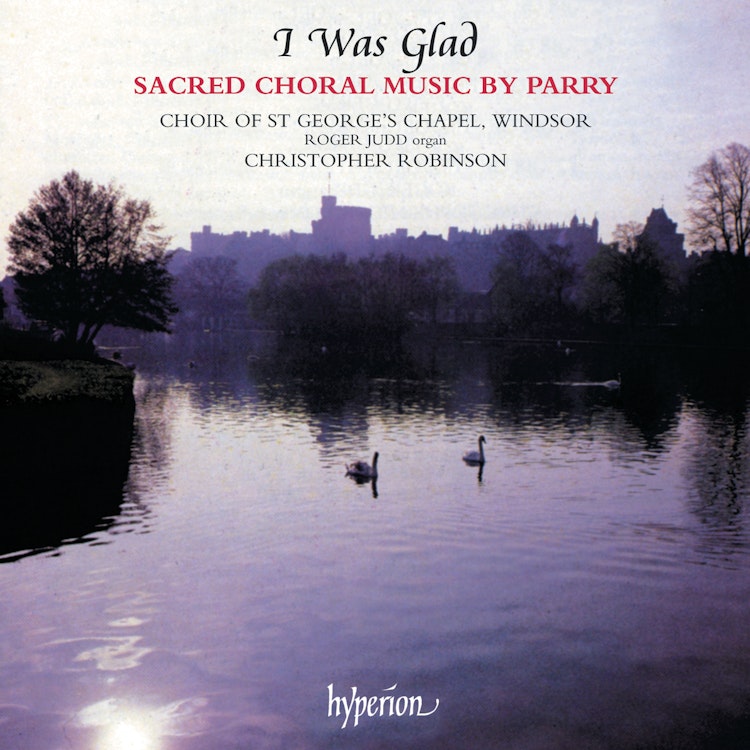
Parry's anthem "I was glad" was sung twice at the Coronation of Edward VII in 1902 because the signal for the King's arrival was given prematurely.
Composer Biography
Parry, though outwardly a typical English country gentleman, was a deeply emotional artist and a radical thinker in his philosophy of life.
Composition History
Parry's well-known choral works were often written in response to commissions for special occasions, as his professional career kept him from daily church music involvement.
You might also enjoy...
Finzi, Bax & Ireland: Choral Music
Finzi: Lo, the Full, Final Sacrifice & Other Choral Works
Britten, Finzi & Holst: Sacred Works
Britten: A Ceremony of Carols, Missa brevis & Other Choral Works
Rutter: Requiem & 5 Anthems
Britten: The Sacred Choral Music
Rutter: Requiem
Advent Live, Vol. 2
Samuel Coleridge-Taylor
Walton: Coronation Te Deum; Missa brevis; A Litany & Other Choral Works