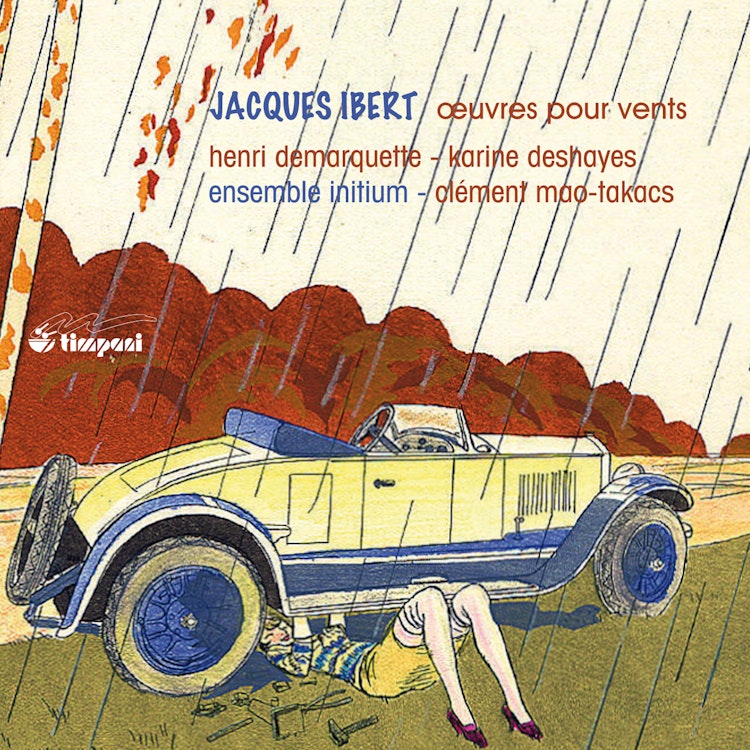
Ibert's Deux Mouvements for an unusual wind quartet was written as a required submission for residents of the Villa Médicis after he won the Premier Grand Prix de Rome in 1919.
Performer Biography
Henri Demarquette, the cellist on this recording, began his international career after being noticed by Yehudi Menuhin and frequently performs contemporary music.
Compositional Technique
The Concerto for Cello and Wind Instruments by Jacques Ibert features polytonal harmonies, allusions to jazz, and an impertinent spirit, reflecting a post-war anti-Romantic character.
Historical Context
During World War II, Jacques Ibert's music was banned until early 1941 and boycotted throughout the Occupation by the Vichy government, which considered him a traitor.
Composer Biography
Jacques Ibert, the composer, was appointed director of the Villa Médicis in Rome in 1937, a residence for winners of the Prix de Rome.
Composer's Artistic Vision
Jacques Ibert, like many composers of his generation, showed a strong preference for wind instruments, dedicating most of his chamber music to them in various combinations.
Performer Biography
The Ensemble Initium, a wind octet, was founded in 2005 at the Paris Conservatory and has won several awards, including a First Prize for Chamber Music at the CNSM of Paris in 2009.
You might also enjoy...
Goehr: Since Brass, nor Stone...
Max Giteck Duykers: Folding Music
Victoria Bond: Peculiar Plants
La musique
Peregrinations
Paul Chihara: Love Music
Inner Song - Chamber Music By Carter, Veress & Holliger