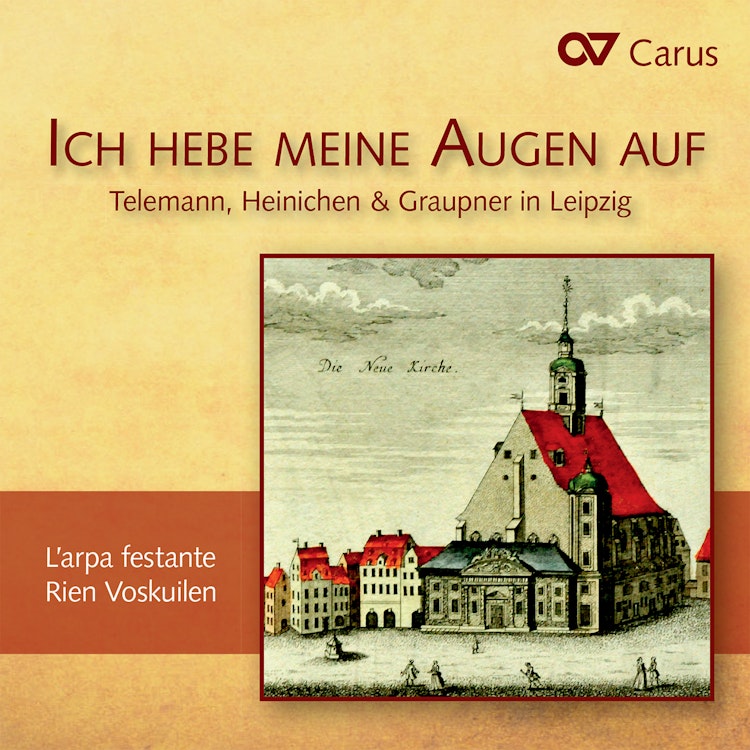
Ich hebe meine Augen auf - Telemann, Heinichen & Graupner in Leipzig
1/1/2015, 28 Tracks, 1:18:12
Featuring
Rien Voskuilen
Veronika Winter
Markus Flaig
Alex Potter
Hans Jörg Mammel
L'Arpa festante
Georg Philipp Telemann
Johann Christoph Graupner
Johann David Heinichen
Did you know?
1/7
Historical Context
At the beginning of the 18th century, the University of Leipzig was known as a "galant" university, attracting many musically ambitious students.
Historical Context
Between 1700 and 1715, almost every composer who later became famous in German Baroque music studied in Leipzig, including Telemann, Graupner, and Heinichen.
Composer's Artistic Vision
Johann David Heinichen advocated for integrating theatrical music principles into sacred music, believing it delighted listeners to hear virtuosos express emotions inherent in the text.
Composition History
Telemann's sacred cantata, Ich hebe meine Augen auf, was likely composed around 1703, illustrating his early musical activities in Leipzig despite his mother's wish for him to study law.
Composer's Artistic Vision
Johann David Heinichen, a composer featured on this album, challenged traditional rules, stating that the central task of his generation was to explore the "unfathomable depths" of emotions and words in music.
Composer Biography
Telemann's musical career in Leipzig began when a roommate discovered his Psalm composition, leading to a commission to write music for St. Thomas Church every fortnight.
Interpretation
The ensemble L'arpa festante, founded in 1983, uses original instruments appropriate to the period of the works performed to faithfully recreate authentic sounds and colors.
You might also enjoy...
Ich hebe meine Augen auf: Telemann, Heinichen & Graupner in Leipzig