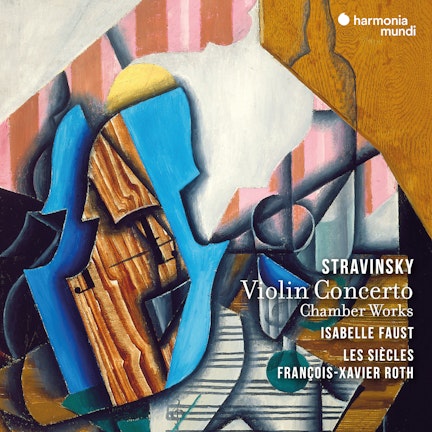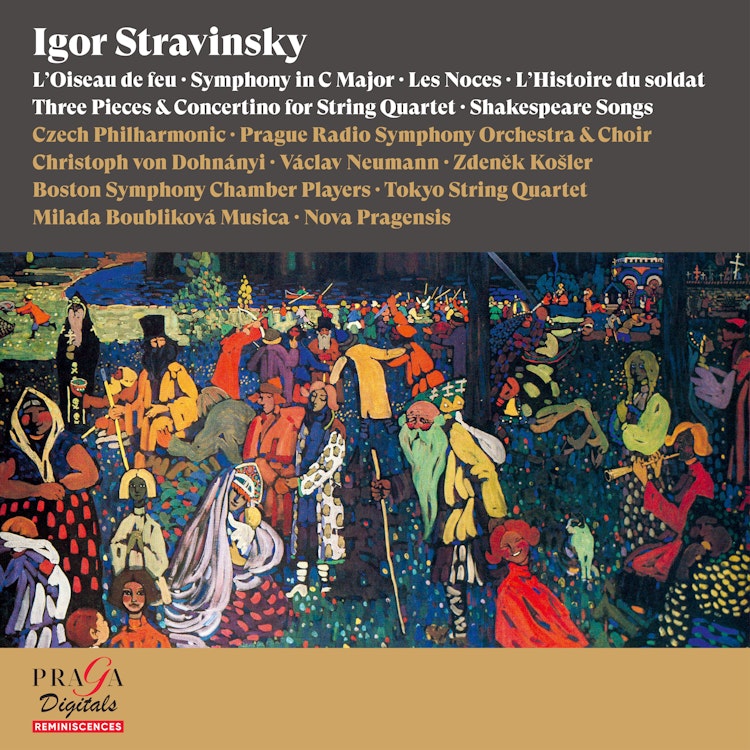
Igor Stravinsky: The Firebird, Symphony in C Major, The Wedding, L'Histoire du soldat, Three Pieces & Concertino for String Quartet, Shakespeare Songs
Featuring
Did you know?
1/7Composition History
Stravinsky's Symphony in C was written during a period of 'rupture' and 'uprooting' in his life, though some musicologists debate the direct influence of these events on the work itself.
Compositional Technique
The Three Songs from William Shakespeare represent Stravinsky's first clearly twelve-tone compositions, with each song exploring a different tone-row.
Compositional Technique
The 'orchestra' for The Soldier's Tale imitates the bands used by itinerant circuses, notably replacing the bassoon with an alto saxophone.
Composition History
Stravinsky's ballet The Firebird was commissioned by Diaghilev, and its success paradoxically became an obstacle to the reception of his later, more revolutionary works like The Rite of Spring and Les Noces.
Compositional Technique
In The Firebird, Stravinsky began to develop his own characteristic orchestral effects, such as trombone glissandi and natural harmonics in the strings, moving away from Rimsky-Korsakov's eclectic aesthetic.
Composition History
Stravinsky's The Soldier's Tale was inspired by one of Afanasiev's tales about a soldier and the Devil, where the soldier tricks the Devil into drinking too much vodka and eating buckshot disguised as caviar.
Composer's Artistic Vision
Stravinsky himself compiled the Russian text for Les Noces (The Wedding) using Kirievsky's anthology of wedding songs, some of which included words by Pushkin.